
The heart of your water system. Whether you need a new Submersible Well Pump Installation or an emergency Well Pump Replacement, our team provides the expertise to get your water flowing today.
Specializing in Conventional Well Systems across Maryland, Virginia, and DC for over 47 years.
Most residential wells in our region operate as a Conventional Well System. This setup uses a high-quality submersible pump located deep inside the well casing, paired with a pressure tank in your home.
While the technology is “standard,” the installation is critical. We ensure that your Submersible Well Pump is perfectly calibrated to your well’s depth and your home’s water demand to prevent “short-cycling” and extend the life of your equipment.
As part of our diagnosis, we help you determine the best setup for your home:
Conventional Systems: Use a standard pump that cycles on and off at set pressures (40/60 PSI). It is simple, durable, and the most affordable option.
Constant Pressure Systems: Use a Variable Frequency Drive (VFD) to provide steady, “city-like” pressure regardless of how many faucets are running.
(If you are tired of pressure drops when the shower and dishwasher run at the same time, ask us about our Constant Pressure Upgrades).




Unlike a jet pump which sits in your basement, a Submersible Pump pushes water up from the bottom of your well. Because it is underwater and out of sight, it can be hard to know when it’s breaking down—until the water stops.
Watch for these warning signs:
Sputtering Water: Air spurts from your faucets (often a sign of a failing check valve or dropping water table).
High Electric Bills: If your pump is running continuously to maintain pressure, it is wearing out.
Low Water Pressure: The pump may be losing its ability to lift water from deep depths.
“No Water” Emergencies: The ultimate sign of pump failure, wire damage, or a tripped breaker.
Troubleshooting Low Pressure in Maryland & Virginia Wells
In our region, low water pressure isn’t always a dead pump. It can often be a clogged sediment filter, a water softener restriction, or a failing pressure tank. However, if your pump is running constantly but your pressure gauge won’t rise above 40 PSI, your submersible pump’s “stages” (the internal impellers) may be worn down by local sediment. We provide precision diagnostics to determine if you need a simple pressure switch adjustment or a full Submersible Well Pump Installation.
You cannot just drop any pump into a well. Installing the wrong Horsepower (HP) or Gallons Per Minute (GPM) rating can destroy your plumbing or burn out the pump in months. We size every Submersible Well Pump Installation based on three critical factors:
We size every replacement based on three critical factors:
Well Depth: How deep is the water? (Static Water Level vs. Drawdown Level).
Flow Rate (GPM): How much water does your family need at peak usage?
Pressure: How much lift is required to get water to your second-floor shower?
Common Pump Sizes We Install:
1/2 HP Submersible Pump: Ideal for shallow wells with moderate water needs.
3/4 HP Submersible Pump: The industry standard for most residential homes in Maryland and Virginia.
1 HP & 1.5 HP Deep Well Pumps: Required for wells deeper than 300+ feet or homes with high elevation changes.
We carry and install professional-grade brands including Franklin Electric, Goulds, and Grundfos.
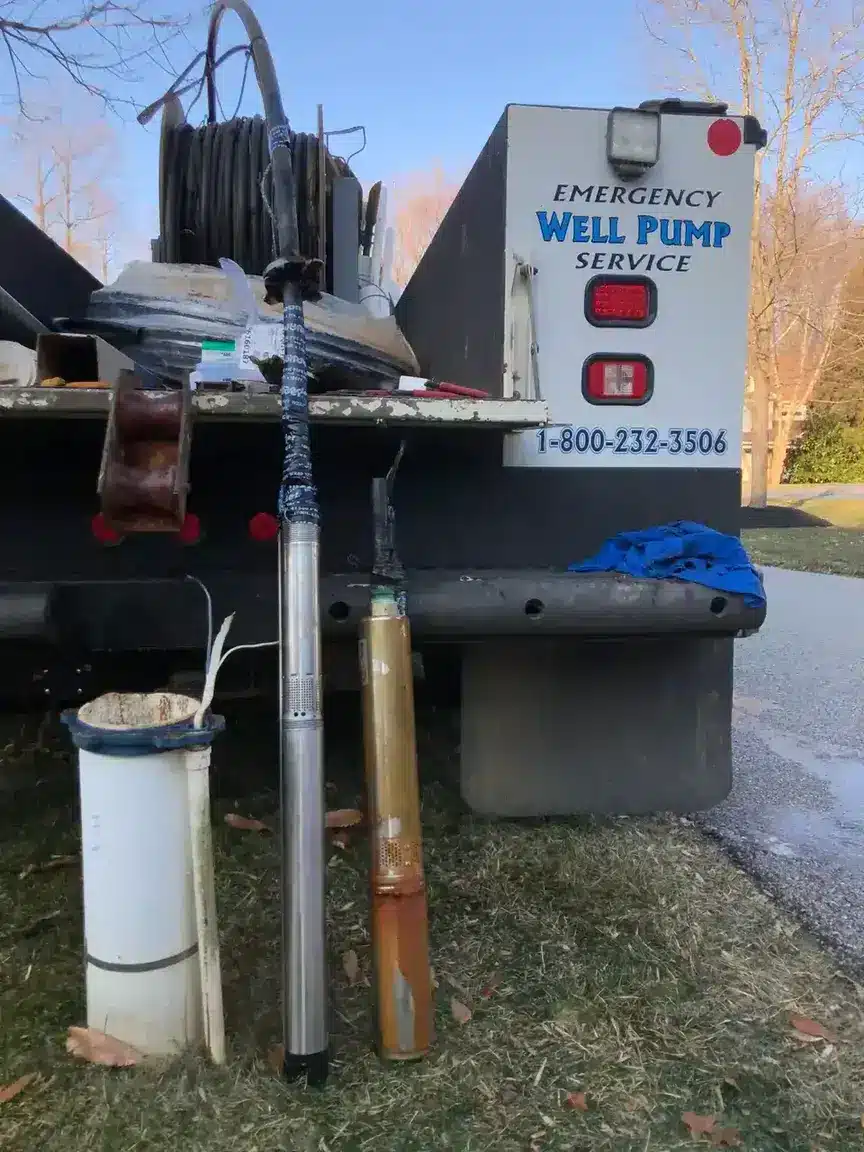
When choosing a submersible pump for deep Maryland wells, the internal components matter. Here is how our professional-grade Franklin Electric and Goulds systems compare to standard retail models.
| Component | NWS Professional Grade | Standard Retail Grade |
|---|---|---|
| Discharge Head | Heavy-duty No-Lead Brass/Stainless | Thermoplastic/Plastic |
| Check Valve | Spring-loaded Internal Stainless | External Plastic (Prone to leaks) |
| Impeller Material | Celcon or Noryl (Sand resistant) | Standard Composite |
| Warranty | 5-Year Professional Support | 1-Year Limited |
Replacing a submersible pump is heavy, technical work. Here is how National Water Service handles the job safely:
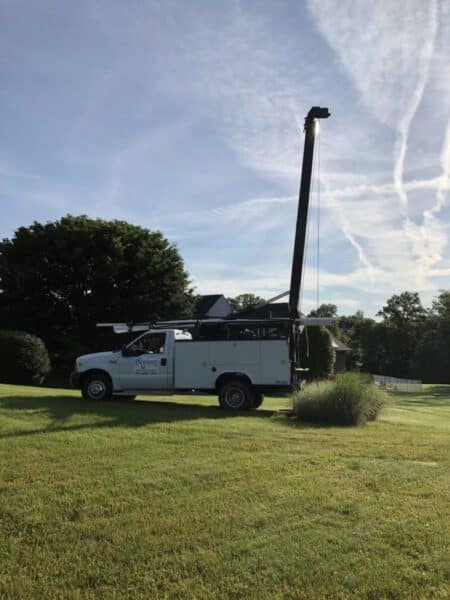
The “Pull”: We use a specialized pump hoist (the “Pump Puller”) to lift the old pump, pipe, and wire out of the well casing without damaging the liner.
The Inspection: We inspect the Submersible Well Pump as well as all Connections, Check Valves and Wire for any breaks or issues.
The Upgrade: Should a new Well Pump be required we install both conventional and constant pressure well pump systems, depending on your water wants and needs. We recommend all new well pumps be installed with new wire to prevent breaks in the line.
The Test: We sanitize the well and run a flow test to ensure the system builds pressure and shuts off correctly.
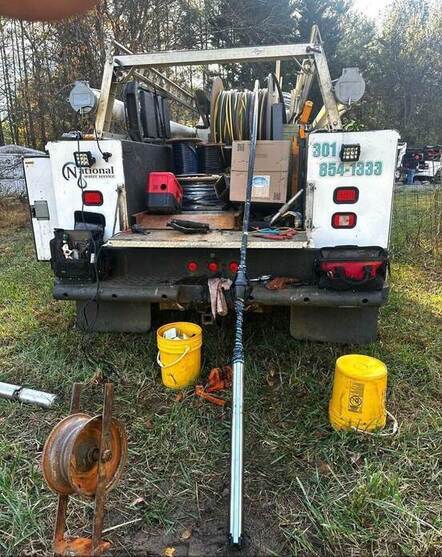
One of the most common questions we get is: “How much does a well pump cost?” While the pump itself is a significant part of the cost, the total price depends on the depth of the well.
Deeper Well = More Labor & Wire: Pulling a pump from 400 feet requires more manpower and heavier wire gauge than a pump at 80 feet.
Constant Pressure Upgrades: Many homeowners choose to upgrade to a Constant Pressure System (Variable Speed Drive) during replacement to get “city-like” pressure.
Our Warranty Promise: We install only professional-grade pumps that come with industry-leading manufacturer warranties
The average lifespan is 12 to 15 years. However, factors like sediment, frequent cycling (turning on/off too much), and lightning strikes can shorten this life.
This could be a broken shaft, a hole in the drop pipe (recirculating water inside the well), or the water level has dropped below the pump intake.
We strongly advise against it. The assembly can weigh hundreds of pounds. Dropping the pump and pipe back down the well is a catastrophic mistake that can cost thousands to fix (fishing it out).
While the submersible motor itself is a sealed unit and must be replaced if it fails, we frequently repair the above-ground components (pressure switches, tanks, and control boxes).
With over 47+ years of experience in water repair and management, we are proud to offer dedicated Water Techs & Master Plumbers to homes and businesses. Get affordable pricing, competitive quotes, and quality materials that last.