
National Water Service provides professional water treatment services throughout Frederick County, MD — from the City of Frederick and Urbana to the rural well-water communities of Thurmont, Emmitsburg, Middletown, and the Catoctin Mountain foothills. Whether your home is on a municipal system, a community water supply, or a private well, we design treatment solutions based on your actual water test results — not assumptions.
In addition to Frederick County, we provide expert water treatment across Maryland, Washington DC, and Northern Virginia.
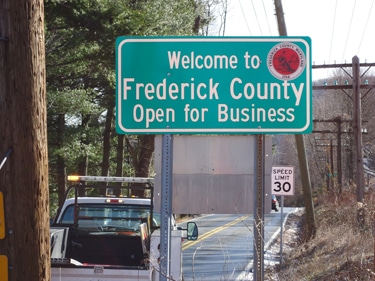
Unlike Montgomery County or Howard County, where a single large utility serves most homes, Frederick County has a patchwork of water providers. Understanding which system serves your home is the first step toward choosing the right treatment.
City of Frederick — The City draws its water from three surface sources: the Monocacy River, Linganore Creek, and the Fishing Creek Reservoir. The City also receives treated water from Frederick County’s New Design Water Treatment Plant, which draws from the Potomac River under a 2006 capacity-sharing agreement. In 2024, the City produced 1.9 billion gallons of drinking water with zero MDE or EPA violations. City water is treated with chlorine for disinfection and fluoride is added.
Frederick County (DUSWM) — The county’s Division of Water and Sewer Utilities operates its own water treatment plants and distribution systems, including the New Design Water Treatment Plant (Potomac River source). The county provides water service to communities including New Market, Walkersville, and portions of the City of Frederick. County treatment facilities are staffed 24/7.
Independent Municipal Systems — Seven incorporated towns in Frederick County own and operate their own water supply systems:
Each of these systems draws from different sources and treats water differently — which means water quality, hardness, and mineral content can vary significantly from one town to the next.
Private Wells — A large percentage of Frederick County homes — particularly in the rural agricultural areas, mountain communities, and unincorporated areas between towns — rely entirely on private wells. These homes are not connected to any municipal system, and the homeowner is solely responsible for water quality.
Frederick County’s water hardness varies by source and location. City of Frederick municipal water averages approximately 99 mg/L (PPM) — classified as “slightly hard” by USGS standards. However, this is an average — homes in areas receiving Potomac River-sourced water from the New Design plant may experience harder water, while other areas may be softer.
For private well owners, hardness levels depend entirely on local geology. Wells drawing from the limestone formations in the Frederick Valley often produce notably hard water with elevated calcium and magnesium. The Triassic sandstone and shale formations in the northern and eastern parts of the county tend to produce different mineral profiles.
Hard water — whether from municipal supply or private well — causes scale buildup on fixtures, reduces water heater efficiency, spots on glassware, and makes soap less effective. A properly sized water softener eliminates these issues and protects your plumbing.
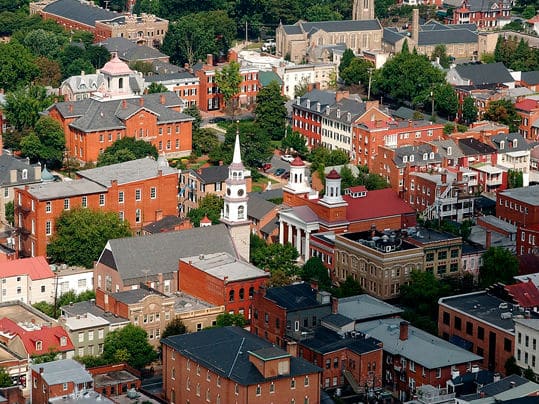
Frederick County’s mix of agricultural land, surface water sources, and varied geology creates water quality challenges that are distinct from the more suburban counties closer to DC.
With over 60% of the Monocacy River watershed in cropland and pasture, agricultural runoff is a significant concern — particularly for private well owners. Nitrates from fertilizer and animal waste can leach into groundwater and are especially dangerous for infants and pregnant women. The EPA maximum contaminant level for nitrates is 10 mg/L. If your well is in a farming area of Frederick County, annual nitrate testing is essential.
Iron in well water is one of the most common complaints we hear from Frederick County homeowners. It causes orange and brown staining on sinks, toilets, showers, and laundry. Hydrogen sulfide produces a rotten egg odor that’s particularly noticeable in hot water. Our iron breaker and sulfur breaker systems are specifically designed for these issues.
Many Frederick County wells produce water with a pH below 7, which corrodes copper pipes, damages fixtures, leaches metals into drinking water, and creates blue-green staining. An acid neutralizer uses natural calcite media to raise pH and protect your plumbing — it’s one of the most common systems we install in Frederick County.
Farm runoff and aging or improperly maintained septic systems can introduce coliform bacteria and E. coli into private well supplies. This is a health risk that requires immediate attention. UV disinfection provides continuous, chemical-free protection against bacteria.
Frederick County has been actively testing for PFAS compounds in its water systems since 2021, working with the Maryland Department of the Environment. The county continues regular testing at every county-owned water treatment facility. For homeowners concerned about PFAS — whether on municipal water or private wells — a reverse osmosis system at the kitchen tap is the most effective treatment for reducing these compounds.
The City of Frederick’s use of chlorine for disinfection can produce trihalomethanes (TTHMs) and other byproducts, particularly where the Monocacy River is the source. Third-party testing has detected bromodichloromethane in City of Frederick water. Whole-house carbon filtration reduces chlorine taste, odor, and disinfection byproducts.
Frederick County wells drilled into the Piedmont and Blue Ridge rock formations can contain elevated radon levels. Radon is a tasteless, odorless radioactive gas that becomes an inhalation risk when water is used for showering or laundry. Our radon removal systems are designed specifically for this issue.
Well water systems in Frederick County often experience sediment after heavy rainfall or seasonal changes, particularly in shallow wells or wells with aging casings. Sediment filtration protects your plumbing and downstream treatment equipment.
Frederick County has one of the highest concentrations of private wells in the Maryland counties we serve. Rural communities between the incorporated towns — along with mountain properties near Thurmont, Emmitsburg, and Catoctin — rely entirely on groundwater.
The county’s geology creates distinct well water conditions depending on location:
Common well water issues in Frederick County include hard water, iron staining, sulfur odor, low pH, bacteria (from farm runoff and septic systems), nitrates (from agricultural areas), radon, and sediment. A comprehensive well water filtration system designed after professional testing is the most effective approach.
If you’re experiencing low water pressure or suspect your well pump or pressure tank may be failing, our well pump services team can diagnose and repair the issue — often the same day.
The Maryland Department of the Environment recommends annual testing for all private wells. We provide free basic in-home water testing and can coordinate comprehensive lab analysis for nitrates, bacteria, radon, and other contaminants when needed.

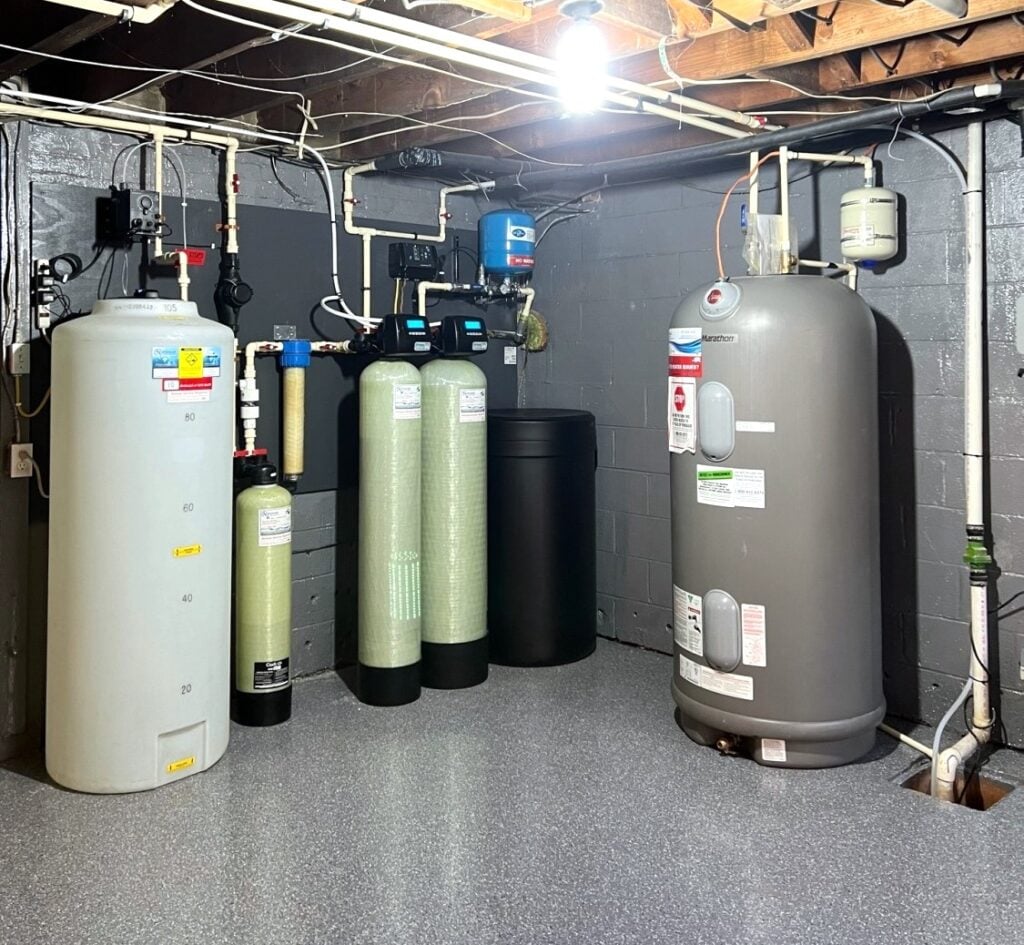
Every system we install is selected based on your water test results, household size, and plumbing configuration. We use non-proprietary equipment — meaning you’re never locked into a single brand for parts or service. Common solutions for Frederick County homes include:
We handle installation, annual maintenance and emergency service across Frederick County. Our office is in Woodbine, MD.
View our full range of water treatment services or browse our before-and-after installation gallery to see real results from homes like yours.
We provide water treatment, well pump services, and plumbing services throughout Frederick County, MD, including:
In addition to Frederick County, we provide expert water treatment across Maryland, including Montgomery County, Howard County, Carroll County, Baltimore County, Anne Arundel County, Prince George’s County, Loudoun County, VA, Fairfax County, VA, and Washington, DC.
The City of Frederick produced 1.9 billion gallons of drinking water in 2024 with zero MDE or EPA violations. However, the Monocacy River watershed — which supplies much of the city’s water — runs through over 60% cropland and pasture, making the source water susceptible to agricultural contaminants. Third-party testing has also detected disinfection byproducts like bromodichloromethane. While city water meets regulatory standards, many Frederick homeowners add carbon filtration or reverse osmosis for additional peace of mind.
The sulfur (hydrogen sulfide) smell is common in Frederick County wells, particularly in certain geological formations. It’s not harmful at typical levels but is extremely unpleasant. An iron breaker / sulfur breaker system oxidizes and filters out the sulfur, eliminating the odor. If you also have iron staining, both issues can often be addressed with a single system.
If your well is located near agricultural land — which covers a significant portion of Frederick County — nitrate contamination is a real concern. Nitrates above 10 mg/L (the EPA maximum) are especially dangerous for infants. Annual water testing is essential, and a reverse osmosis system is the most effective treatment for nitrate reduction in drinking water.
If your well is located near agricultural land — which covers a significant portion of Frederick County — nitrate contamination is a real concern. Nitrates above 10 mg/L (the EPA maximum) are especially dangerous for infants. Annual water testing is essential, and a reverse osmosis system is the most effective treatment for nitrate reduction in drinking water.
Frederick County has been testing for PFAS since 2021 and continues monitoring at all county-owned treatment facilities. For homeowners who want additional protection — particularly those on private wells that may not be tested — a reverse osmosis system is the most effective home treatment for PFAS reduction.
We recommend testing for bacteria (coliform/E. coli), pH, hardness, iron, manganese, sulfur, nitrates, and radon at minimum. Frederick County’s agricultural landscape and varied geology mean your well could be affected by any combination of these. Schedule a free water test to find out what’s in your water. If you’re also experiencing pressure or flow issues, our well pump team can inspect your system.
It varies by source. City of Frederick municipal water averages around 99 mg/L (slightly hard). But private wells in the limestone formations of the Frederick Valley can be significantly harder. Wells in the Catoctin Mountain area tend to have different challenges — lower pH and potential radon. The only way to know your specific hardness level is with a water test.
Yes — we provide water treatment services to over 30 communities throughout Frederick County. See our full list of service areas above. Our office is in Woodbine, MD. Contact us to confirm service availability in your specific area.
Cost depends on the system type and your specific water conditions. A single acid neutralizer is a different investment than a comprehensive whole-house system with softening, iron removal, and UV disinfection. We provide free in-home water testing and a detailed estimate before any work begins — no pressure, no obligation. Call 301-854-1333 to schedule.

Schedule your free water test today or call 301-781-5866 to speak with a water treatment specialist.