
National Water Service provides professional water treatment services throughout Anne Arundel County, MD — from Glen Burnie, Severna Park, and Crofton to Annapolis, Edgewater, and Pasadena. Anne Arundel County is geologically distinct from the central Maryland counties we serve — it sits entirely on the Atlantic Coastal Plain rather than the Piedmont, which means its water comes from underground aquifers instead of reservoirs and rivers. This creates a fundamentally different set of water quality challenges.
In addition to Anne Arundel County, we provide expert water treatment across Maryland, Washington DC, and Northern Virginia.
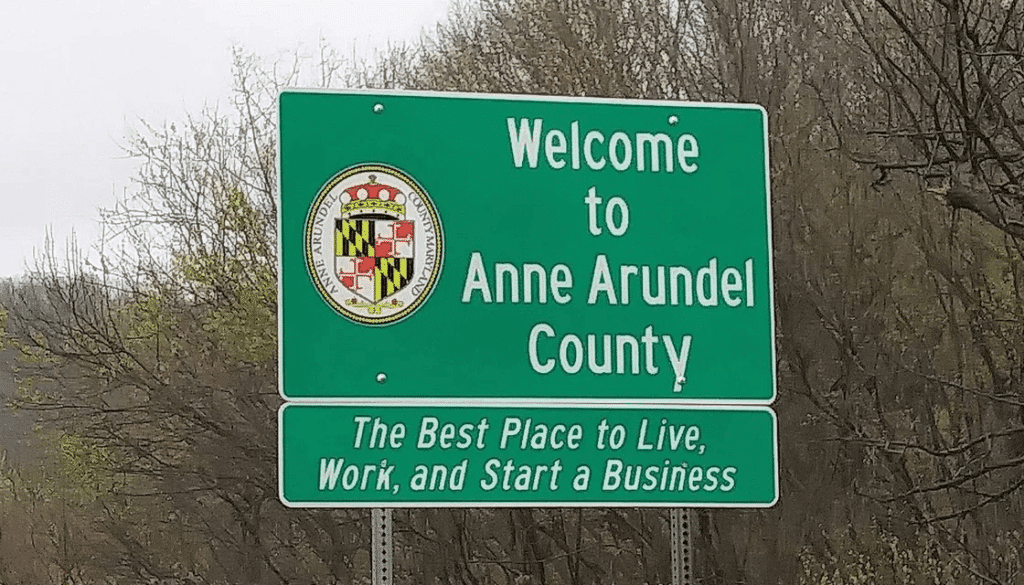
Anne Arundel County’s water supply system is unlike any other county in our service area. The county relies primarily on groundwater — water drawn from deep underground aquifers beneath the Coastal Plain — rather than the surface reservoirs that supply most of central Maryland.
Anne Arundel County DPW (Department of Public Works) — The county operates 8 major water treatment facilities and 3 independent wells, producing and treating nearly 13 billion gallons of water per year for over 110,000 properties. The county’s wells tap into multiple Coastal Plain aquifer systems, including:
Major water treatment facilities include plants at Crofton, Arnold, Broad Creek, and others throughout the county.
Baltimore City Supply (northwestern Anne Arundel County) — A portion of the county — particularly areas near Glen Burnie and the northwestern boundary — receives treated surface water from Baltimore City. This water originates from Liberty Reservoir and is treated at the Ashburton Filtration Plant. This supply is harder (up to 185 mg/L) and has a different chemical profile than the county’s groundwater.
City of Annapolis — The state capital operates its own water system, separate from the county DPW.
Private Wells — Homes outside the county’s public water distribution system — particularly in rural western and southern areas — rely on private wells drawing from the same Coastal Plain aquifer formations. These wells are the homeowner’s sole responsibility for testing and treatment.
Because Anne Arundel County sits on the Coastal Plain — a wedge of unconsolidated sand, gravel, and clay sediments that thickens from about 50 feet in the northwest to over 2,000 feet in the southeast — its water behaves very differently from the Piedmont bedrock water found in Montgomery, Howard, Carroll, and Frederick Counties.
Groundwater-dependent supply — The county relies on groundwater as its sole source of drinking water for both the public system and private wells. This makes aquifer sustainability a long-term concern. Anne Arundel County has launched a Managed Aquifer Recharge (MAR) research program to inject treated water back into aquifers to address depletion risks and reduce saltwater intrusion.
Saltwater intrusion risk — Anne Arundel County’s proximity to the Chesapeake Bay creates a unique threat that no other county in our service area faces. Over-pumping of Coastal Plain aquifers can draw brackish water from the Bay into freshwater supply zones. The county monitors this risk through a 42-well observation network operated in partnership with the Maryland Geological Survey.
Iron is a major issue — Coastal Plain groundwater in Anne Arundel County frequently contains elevated iron levels, sometimes as high as 30 mg/L in certain localities. Iron causes orange and brown staining on fixtures, laundry, and appliances. Our iron breaker and sulfur breaker systems are one of our most-installed systems in this county.
Generally softer water than Piedmont counties — Most Coastal Plain aquifer water in Anne Arundel County has hardness below 100 mg/L — significantly softer than the 120–185 mg/L found in WSSC, Baltimore City, and Piedmont well water. However, some areas can still experience moderate hardness, and homes receiving Baltimore City supply in the northwest will encounter much harder water.
Low pH in parts of the county — Eastern Anne Arundel County and areas near the county’s border with Prince George’s County can produce groundwater with low pH (acidic water). This corrodes copper pipes and can leach metals into drinking water. An acid neutralizer corrects this.

The most common complaint in Anne Arundel County. Coastal Plain groundwater dissolves iron from the sandy aquifer sediments, causing orange/brown staining on sinks, toilets, tubs, and laundry. In some areas, iron levels can be extremely high and require specialized treatment. Our iron breaker and sulfur breaker systems or BIRM systems are specifically designed for these conditions.
Found in parts of the county, particularly eastern areas. Causes blue-green staining from copper pipe corrosion, pinhole leaks, and metallic taste. An acid neutralizer raises pH to protect plumbing and health.
Homes on the county’s public water system may notice chlorine taste from the disinfection process. Homes receiving Baltimore City supply in the northwest may notice stronger chlorine taste. Carbon filtration removes chlorine taste and odor throughout the whole house.
Homes in northwestern Anne Arundel County on Baltimore City supply receive water at approximately 185 mg/L hardness — very hard. A water softener eliminates scale buildup and protects appliances.
Properties near the Chesapeake Bay and its tidal estuaries may experience elevated sodium and chloride levels in their well water, particularly during periods of heavy groundwater pumping. This is a long-term concern the county is actively addressing through its MAR program.
As part of its Managed Aquifer Recharge research, Anne Arundel County is actively evaluating PFAS presence and treatment options, including granular activated carbon (GAC) filtration. For homeowners concerned about PFAS, a reverse osmosis system at the kitchen tap provides the most effective household-level treatment.
Homes on private wells, particularly those with shallow wells or in areas with high water tables near the Bay, should test annually for bacteria. UV disinfection provides continuous, chemical-free protection.
Sandy Coastal Plain aquifer water can carry fine sediment, particularly from older wells. Sediment filtration protects plumbing and downstream treatment equipment.
Homes outside the county’s public water distribution system — particularly in rural western and southern areas — rely on private wells drawing from the same Coastal Plain aquifer systems that supply the county’s treatment plants. These wells are not monitored by any government agency. The homeowner is fully responsible for testing and treatment.
Common private well issues in Anne Arundel County include:
The Maryland Department of the Environment recommends annual testing for all private wells. We provide free basic in-home water testing and can coordinate comprehensive lab analysis when needed.
If you’re experiencing low water pressure or suspect your well pump or pressure tank may be failing, our well pump services team can diagnose and repair the issue — often the same day.
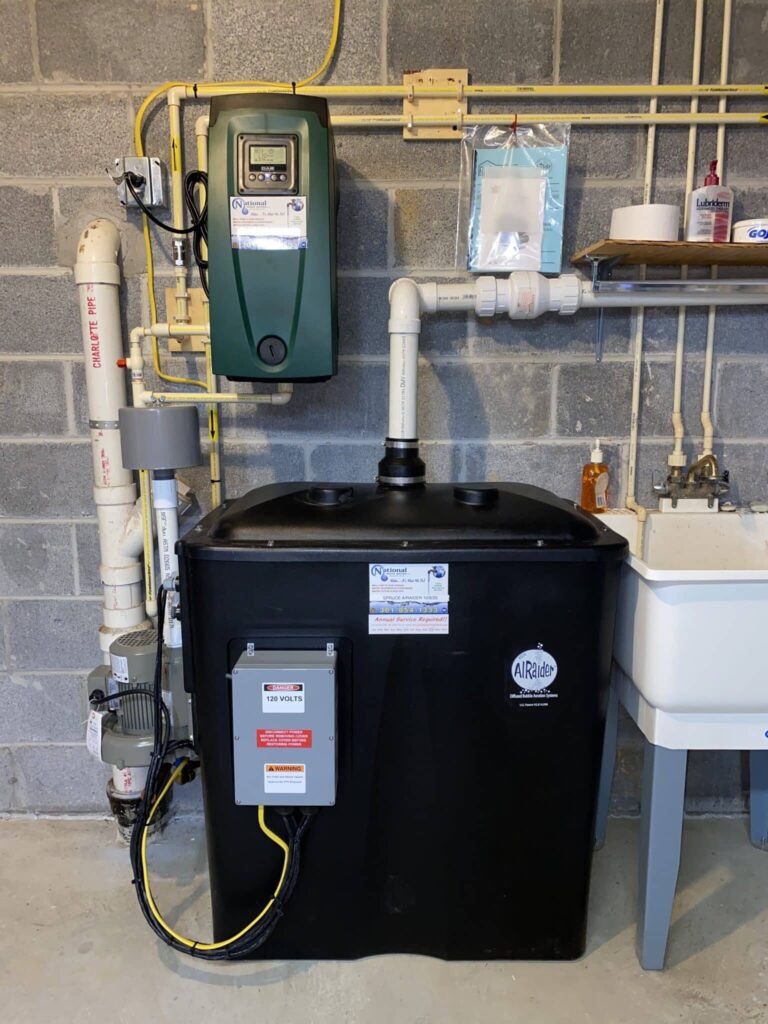
Every system we install is selected based on your water test results, household size, and plumbing configuration. We use non-proprietary equipment — meaning you’re never locked into a single brand for parts or service. Common solutions for Anne Arundel County homes include:
We handle installation, annual maintenance and emergency service across Anne Arundel County. Our office is in Woodbine, MD.
View our full range of water treatment services or browse our before-and-after installation gallery to see real results from homes like yours.

We provide water treatment, well pump services, and plumbing services throughout Anne Arundel County, MD, including:
In addition to Anne Arundel County, we provide expert water treatment across Maryland, including Montgomery County, Howard County, Frederick County, Carroll County, Baltimore County, Prince George’s County, Loudoun County, VA, Fairfax County, VA, and Washington, DC.
Unlike most central Maryland counties that use reservoir or river water, Anne Arundel County relies primarily on groundwater pumped from deep Coastal Plain aquifers — including the Patapsco, Patuxent, Magothy, and Aquia formations. The county operates 8 water treatment facilities and 3 independent wells. Some areas in the northwest receive surface water from Baltimore City’s reservoir system.
Iron dissolved in Coastal Plain groundwater is the most common water quality issue in Anne Arundel County. Some areas have extremely high iron levels. An iron breaker system or BIRM system removes iron before it reaches your fixtures.
It depends on your source. County groundwater from Coastal Plain aquifers is generally softer than water in Piedmont counties — typically below 100 mg/L. However, homes in northwestern Anne Arundel County that receive Baltimore City supply get water at approximately 185 mg/L, which is very hard. A water test confirms your specific level.
Anne Arundel County’s aquifers can be affected by saltwater from the Chesapeake Bay if groundwater is over-pumped. The county monitors this through a 42-well observation network and is developing a Managed Aquifer Recharge program to address long-term sustainability. If your well is near a tidal area and you notice increased salinity, testing is recommended.
We recommend testing for iron, pH, hardness, bacteria (coliform/E. coli), manganese, nitrates, and sediment at minimum. Coastal Plain wells in Anne Arundel County face different challenges than Piedmont wells — iron is typically the primary concern rather than radon or low pH. Schedule a free water test to find out what’s in your water. If you’re experiencing pressure issues, our well pump team can inspect your system.
Yes — we provide water treatment services to over 25 communities throughout Anne Arundel County. See our full list of service areas above. Our office is in Woodbine, MD. Contact us to confirm service availability.
Cost depends on the system type and your specific water conditions. An iron removal system for a Crofton home is a different investment than a multi-stage system for a Davidsonville well. We provide free in-home water testing and a detailed estimate before any work begins — no pressure, no obligation. Call 301-854-1333 to schedule.

Schedule your free water test today or call 301-781-5866 to speak with a water treatment specialist.