Aerated water is groundwater that has been treated with oxygen to remove harmful gases like radon, eliminate “rotten egg” odors, and oxidize minerals like iron. This natural, chemical-free process makes well water safer, clearer, and better tasting.
Aeration is one of the most effective, natural, and chemical-free ways to transform poor-quality well water into clean, healthy drinking water. By simply adding air, we can remove dangerous radioactive gases and neutralize the toughest “rotten egg” odors.
Helping Maryland families achieve pure water through professional aeration technology since 1979.
How Does Water Aeration Work?
The process relies on Gas Transfer. When water is exposed to air, it creates an interface that allows trapped gases to escape while dissolving fresh oxygen into the water. We typically achieve this in two ways:
-
Pressure Aeration: Air is injected into the water line under pressure to oxidize minerals like iron.
-
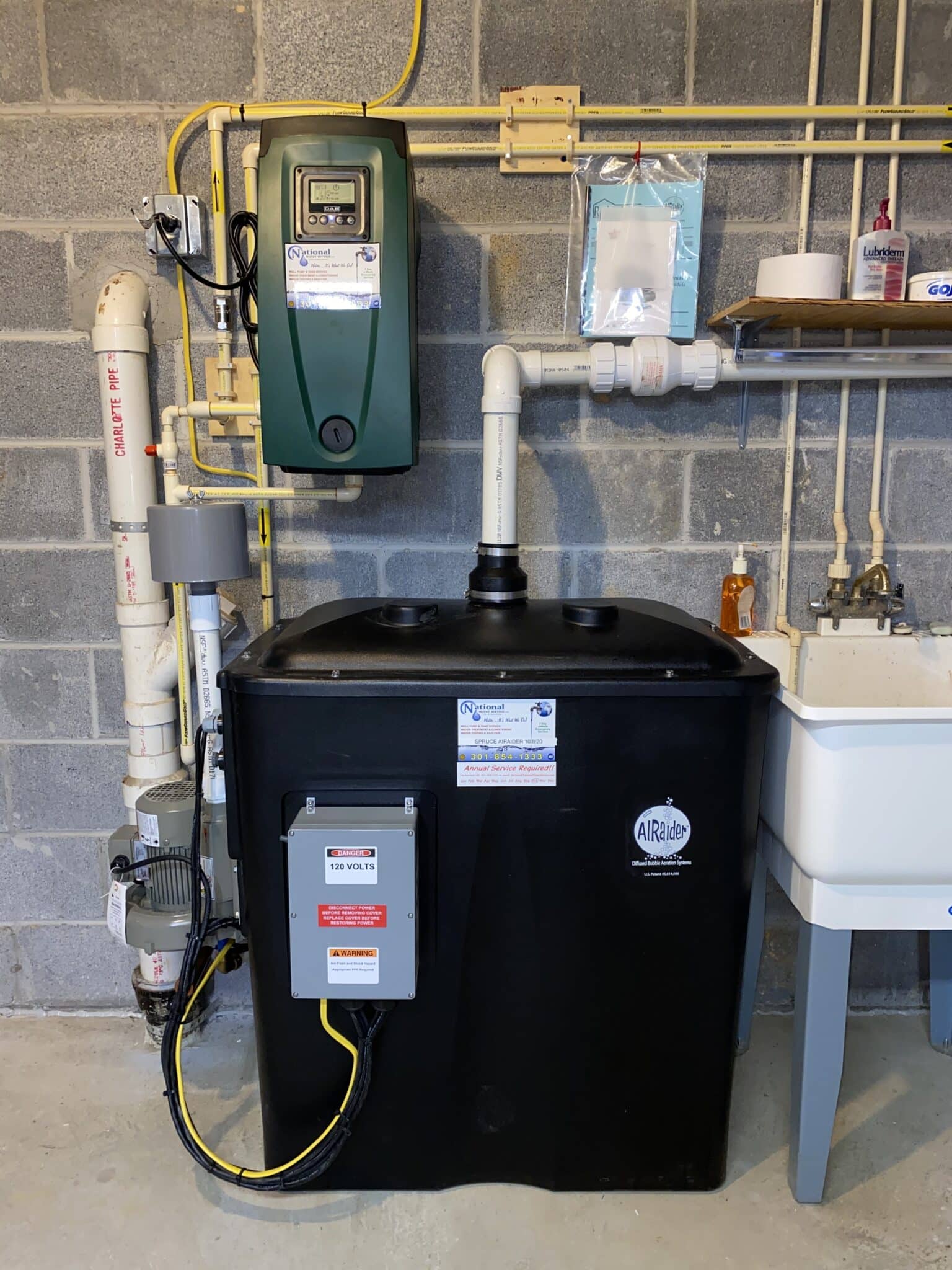
Atmospheric Aeration: Water is sprayed into a tank, allowing gases like Radon to be vented safely outside the home. In professional groundwater remediation, this same process is used to reduce hydraulic pressure and eliminate dissolved methane gas and carbon dioxide.
For Maryland homeowners on private wells, aeration is often the only solution for these critical issues:
-
Radon Removal: Radon is a radioactive gas found in local bedrock. Aeration is the only way to safely vent it out of your water and away from your family.
-
The Risk: Unsure if your levels are unsafe? Read our guide: Is Radon in Water Dangerous?
-
The Solution: To understand the step-by-step process of gas stripping, read our guide on how to remove radon from water.
-
-
Odors Gone: It naturally removes Hydrogen Sulfide, the cause of that embarrassing “rotten egg” smell.
-
Iron & Manganese Control: It “pre-oxidizes” minerals so your other filters can catch them before they stain your tubs. Think of aeration as a “first stage” prep step; it makes chemical oxidation (like chlorination) or standard iron filters much more efficient by doing the heavy lifting of oxidation first.
-
No Chemicals: Aeration relies on air, not chlorine or harsh oxidizers, protecting your plumbing and your septic system. This natural process is so effective that it is used globally as a critical part of the 3 stages of wastewater treatment to remove organic matter before water is returned to the environment.
-
Crisp Taste: Just like aerating a fine wine, adding oxygen to groundwater removes the “flat” taste and makes it more refreshing.
Is Aerated Water Right for Your Home?
Aeration is a “First Line of Defense.” Depending on your water test results, we pair aeration with our other top-tier treatment options:
Iron Breaker System: Our most popular system for oxidizing iron and sulfur using air-induction technology.
Atmospheric Radon Systems: Specialized open-tank systems designed specifically for high-radon wells.
Whole House Filtration: Pair aeration with a carbon filter for water that is both gas-free and chemical-free.
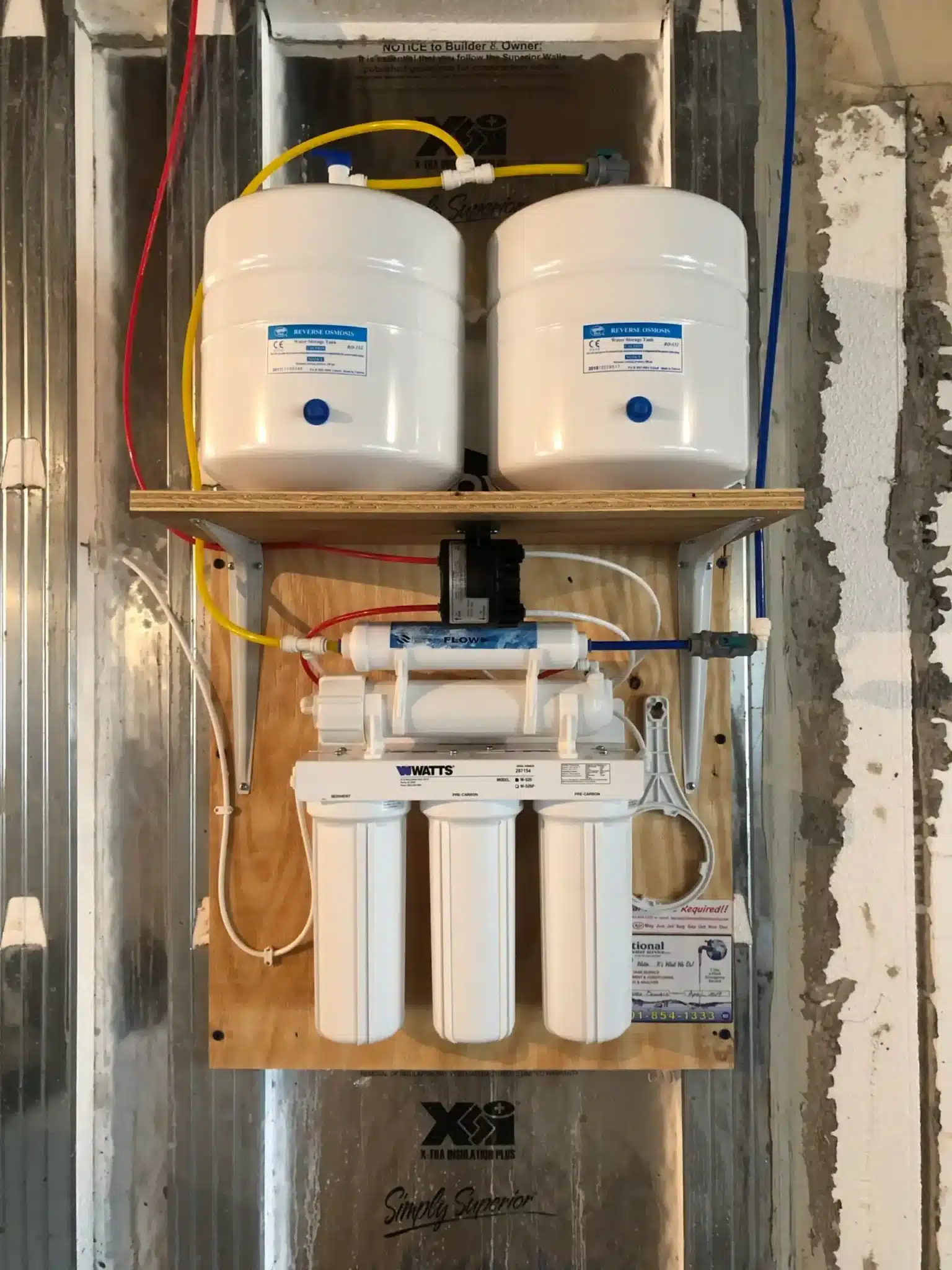
Reverse Osmosis: The final step for pure drinking water at the kitchen tap.
Is Aerated Water Dangerous?
Whether aerated water is considered “dangerous” depends entirely on the context and where you encounter it.
| Scenario | Is it Dangerous? | The Reason |
|---|---|---|
| Drinking (Home Well) | NO | Aeration actually makes water safer by removing toxic Radon gas, methane, and bacteria-feeding hydrogen sulfide. |
| Swimming (Dams/Industrial) | YES | High-volume aeration creates air bubbles that reduce water density. A human body cannot float or swim in it, leading to a high drowning risk. |
| Fish & Aquatic Life | NO | Aeration is vital for fish health; it provides the dissolved oxygen they need to breathe and prevents stagnant water toxins. |
| Plumbing & Pipes | NO | By removing CO2, aeration can actually protect your pipes by raising the pH and reducing the acidity that causes corrosion. |
5 Things You Should Know About Aerated Water
-
It’s Chemical Free: It uses the air around us instead of harsh chlorine.
-
It Improves Taste: Aeration removes the “flat” taste common in deep well water.
-
It Protects Pipes: By removing CO2, it can help raise pH and prevent pipe corrosion.
-
Low Maintenance: Modern systems only need a simple annual checkup.
-
Safety First: While aerated water is safer to drink, it is “dangerous” in nature (like at the base of a dam) because the air bubbles reduce buoyancy, making it impossible to swim in.
Aerated Water & Aeration FAQ
What is aerated water and what is it used for?
Aerated water is water that has been mixed with air (oxygen) to trigger a chemical-physical reaction. In home water treatment, it is used to strip away dissolved gases like Radon and Hydrogen Sulfide (rotten egg smell) and to pre-oxidize iron and manganese so they can be easily filtered out.
Why is aerated water dangerous to swim in?
While aerated water is safe to drink, it is dangerous to swim in in industrial settings like dams or treatment plants. The high volume of air bubbles reduces the water’s density, which means a human body loses its buoyancy. In highly aerated water, you cannot float or swim, creating a severe drowning risk.
Will a radon aeration system also remove iron and manganese?
Yes, partially. While the primary job of an atmospheric aeration system is to vent Radon gas, the process naturally oxidizes dissolved iron and manganese. This turns them into solid particles (rust or black specks) that can then be captured by a secondary sediment or carbon filter.
Does a faucet aerator remove radon?
No. A small screen on your sink adds air to stop splashing, but it is not a system. You need a professional Radon Aeration System to safely remove radioactive gases. Learn more about the professional methods for well water radon treatment.
How do I know if I need an aeration system?
If your water has a “rotten egg” odor, visible orange staining from iron, or if a lab test shows radon levels above 2,100 pCi/L, an aeration system is usually the most cost-effective and chemical-free solution. Because these systems are atmospheric (non-pressurized), our team will also evaluate your existing well pump and pressure tank to ensure your home maintains consistent water pressure after the installation.
Can aeration fix hard water?
No. Aeration is designed to remove gases and oxidize minerals like iron. It does not remove “hardness” minerals like calcium and magnesium. To fix hard water, you would need to pair your aeration system with a Water Softener.
How often does a well water aeration system need maintenance?
For most Maryland homes, a professional aeration system requires a simple annual check-up. This includes cleaning the air injector or spray nozzles and ensuring the venting system is clear of obstructions to maintain 99%+ radon removal efficiency.
Is aerated water the same as carbonated water?
No. Carbonated water (soda water) has carbon dioxide forced into it under pressure to create “fizz.” Aerated water uses oxygen to remove unwanted gases and improve the taste and safety of groundwater.
Get a Professional Analysis of Your Water
Are you experiencing “rotten egg” odors, iron staining, or concerned about radon levels in your local well water? Don’t guess when it comes to your family’s health.
Our experts have been providing specialized aeration and filtration solutions across Maryland, Virginia, and D.C. for over 47+ years. We can help you determine if an aeration system is the right “first line of defense” for your home.
Authored by the National Water Service Engineering Team. Serving Maryland, Virginia, and D.C. since 1979.