
National Water Service provides professional water treatment services throughout Loudoun County, VA — from the rapidly growing eastern communities of Ashburn, Sterling, and Leesburg to the rural well-water properties of western Loudoun including Purcellville, Middleburg, Round Hill, Hillsboro, and Lovettsville. Loudoun County is one of the fastest-growing counties in the country, and its water infrastructure reflects that growth — with a major utility serving the east, small community well systems scattered throughout, and thousands of private wells in the agricultural west.
In addition to Loudoun County, we provide expert water treatment across Maryland, Washington DC, and Northern Virginia.
Loudoun County’s water supply is split between a large central utility and a patchwork of smaller systems and private wells — particularly in western Loudoun where development is limited by zoning.
Loudoun Water (Central System) — The county’s primary utility, serving the majority of eastern and central Loudoun County. Loudoun Water draws from two main sources:
Loudoun Water also operates the Trap Rock Water Treatment Facility and the Broad Run Water Reclamation Facility. In 2024, Leesburg closed its last groundwater well, moving fully to Potomac River surface water through the Kenneth B. Rollins facility, which produces an average of 4.4 million gallons per day.
Community Well Systems — Several smaller communities in Loudoun County operate their own well-based water systems. These are common in western Loudoun subdivisions and small towns. Community systems draw from local groundwater and each has its own water quality profile.
Private Wells — Western Loudoun County — roughly everything west of Route 15 — is predominantly rural with many properties on private wells. These homes draw from Piedmont and Blue Ridge bedrock aquifers. The geology in western Loudoun includes limestone formations that produce hard water with elevated calcium and magnesium, as well as crystalline rock areas with different mineral profiles. Well water quality varies dramatically — even between neighboring properties.
Hard water is widespread across Loudoun County regardless of water source.
Loudoun Water / Potomac supply — Potomac River water is naturally hard, similar to WSSC’s Potomac supply at 120–130 mg/L. This is enough to cause noticeable scale on fixtures, water heater inefficiency, spots on glassware, and reduced soap performance.
Private wells in western Loudoun — Wells drawing from limestone formations produce very hard water — often harder than the municipal supply. Calcium and magnesium carbonates from chalk and limestone bedrock dissolve into the water as it percolates through the ground. Some wells in western Loudoun test well above 131 mg/L (the threshold for “hard” water).
A properly sized water softener is one of the most common systems we install in Loudoun County — for both municipal and well water customers.
The most common issue across the county, whether on Loudoun Water or a private well. Treatment: water softener.
Particularly common in western Loudoun wells. Causes orange/brown staining on fixtures, laundry, and appliances. Treatment: iron breaker / sulfur breaker.
Some western Loudoun wells produce water with a noticeable sulfur odor, especially in hot water. Treatment: iron breaker / sulfur breaker.
Found in wells drawing from certain rock formations in western Loudoun. Corrodes copper pipes, creates blue-green staining, and leaches metals. Treatment: acid neutralizer.
Homes on Loudoun Water’s central system may notice chlorine taste from disinfection treatment. Treatment: carbon filtration.
Western Loudoun’s mix of agricultural land, horse farms, and septic systems creates bacterial contamination risks for private wells. Treatment: UV disinfection or chemical feeder.
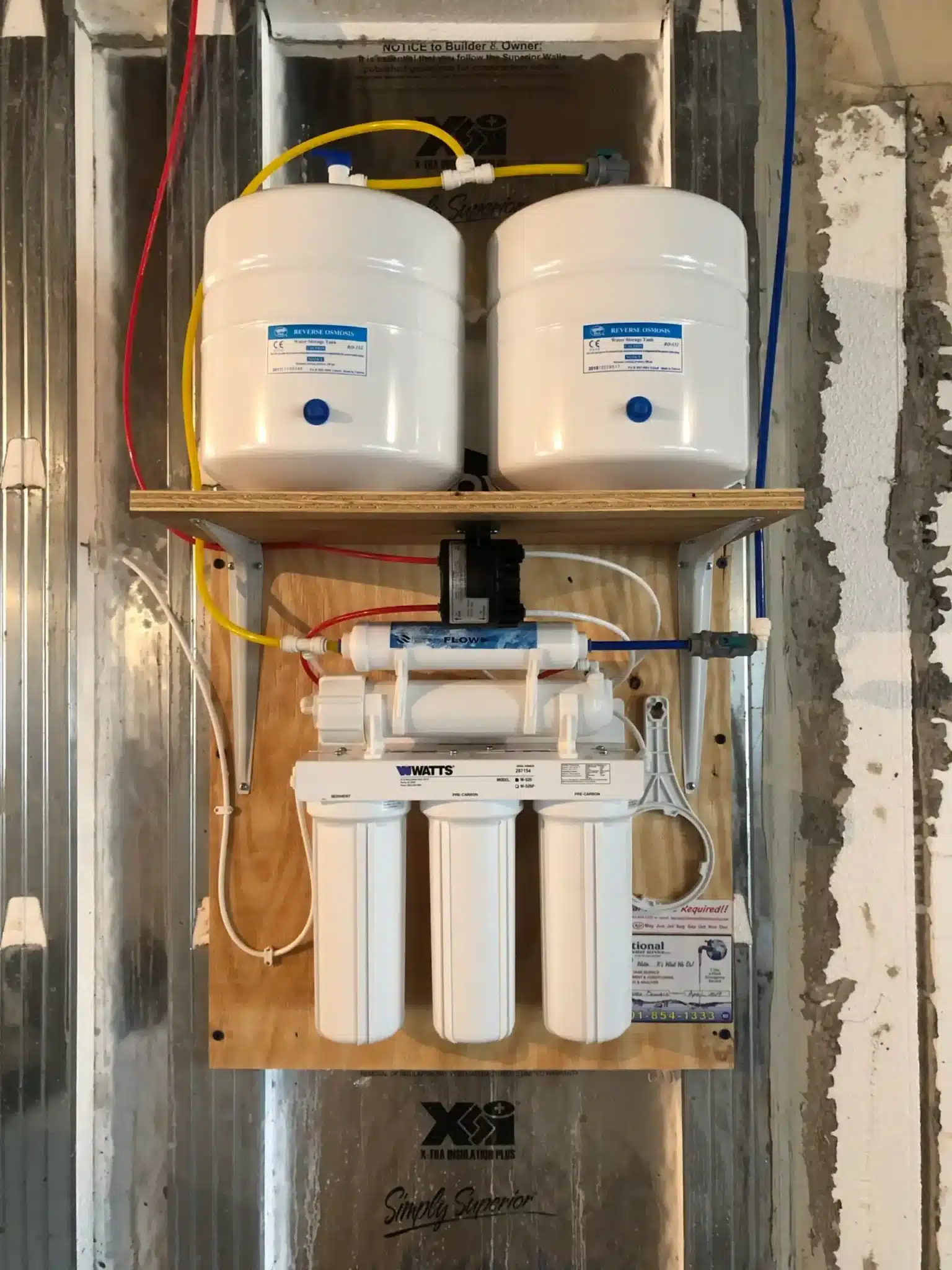
Agricultural areas of western Loudoun can have elevated nitrates from fertilizer and animal waste. Dangerous for infants above the EPA limit of 10 mg/L. Treatment: reverse osmosis.
Deep-rock wells in the Piedmont and Blue Ridge portions of western Loudoun can contain elevated radon. Treatment: radon removal system.
Common in well water after heavy rain or seasonal water table changes. Treatment: sediment filtration.
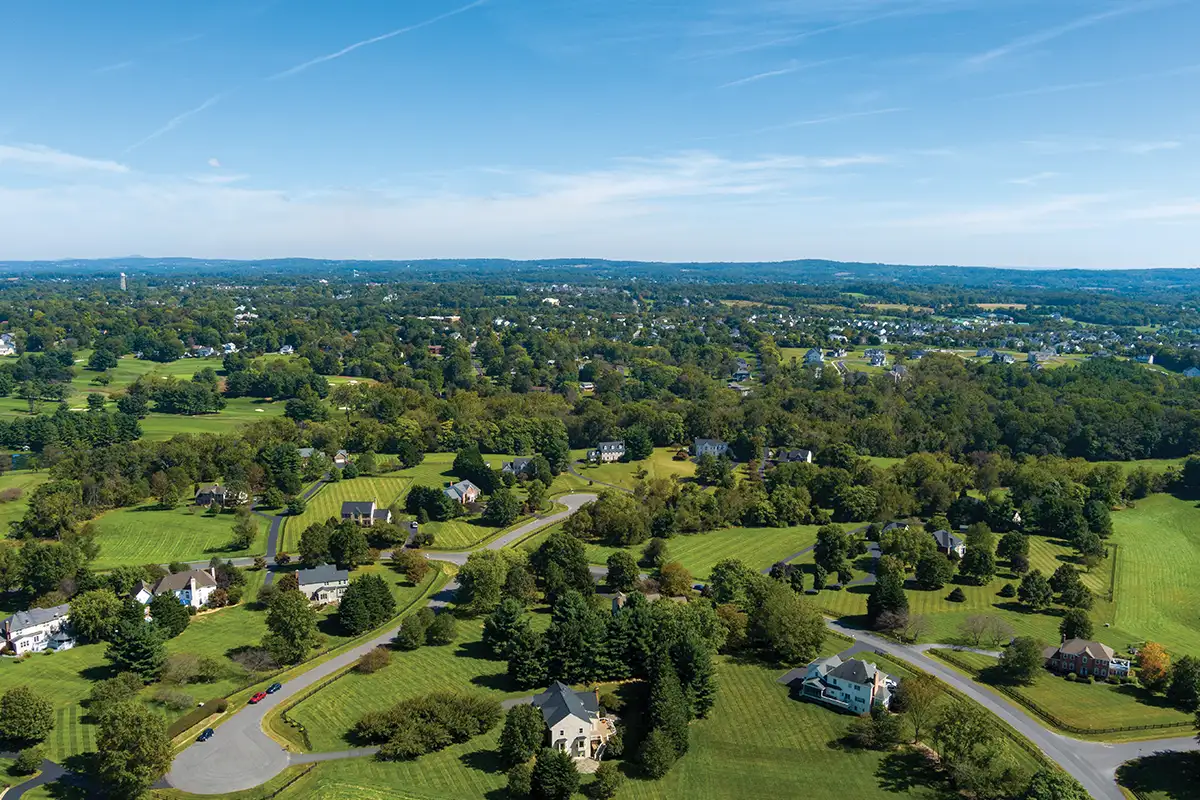
Western Loudoun County — the area west of Route 15 including Purcellville, Round Hill, Middleburg, Hillsboro, Lovettsville, Waterford, Bluemont, Lincoln, and Philomont — is predominantly rural with large-lot zoning, horse farms, vineyards, and agricultural properties. Most homes in this area rely on private wells.
The geology in western Loudoun transitions from Piedmont crystalline rock to Blue Ridge formations near the Shenandoah River. Limestone formations are common, producing hard, mineral-rich water. Wells can range from shallow to several hundred feet deep depending on location and rock formation.
Common well water issues include hard water, iron, sulfur odor, low pH, bacteria (from horse farms, agriculture, and septic systems), nitrates, and radon. A comprehensive well water filtration system designed after professional testing is the most effective approach.
We provide free basic in-home water testing and can coordinate lab analysis for bacteria, nitrates, radon, and other contaminants.
If you’re experiencing low water pressure or suspect your well pump or pressure tank may be failing, our well pump services team can diagnose and repair the issue.
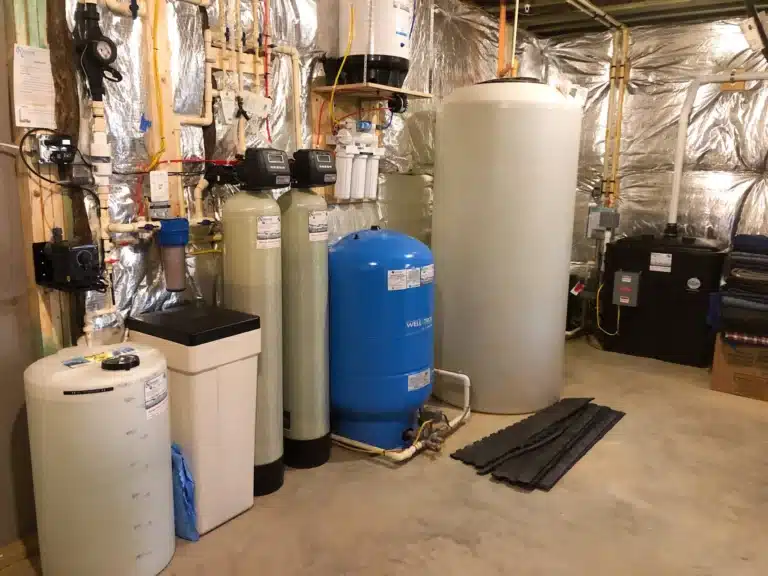
Every system we install is selected based on your water test results, household size, and plumbing configuration. We use non-proprietary equipment. Common solutions for Loudoun County homes include:
We handle installation, annual maintenance and emergency service across Loudoun County. Our office is in Woodbine, MD.
View our full range of water treatment services or browse our before-and-after installation gallery.
We provide water treatment, well pump services, and plumbing services throughout Loudoun County, VA, including:
In addition to Loudoun County, we provide expert water treatment across Maryland, including Montgomery County, Howard County, Frederick County, Carroll County, Baltimore County, Anne Arundel County, Prince George’s County, Fairfax County, VA, Prince William County, VA, and Washington, DC.
Loudoun Water meets all Safe Drinking Water Act standards and draws primarily from the Potomac River. However, the water is hard and may contain chlorine taste from disinfection treatment. Many homeowners add water softeners and carbon filtration for improved quality at the tap.
Very likely. Loudoun Water’s Potomac supply is naturally hard (120–130 mg/L range), and private wells in western Loudoun’s limestone geology can be even harder. A water test confirms your exact hardness level.
We recommend testing for hardness, pH, iron, manganese, sulfur, bacteria (coliform/E. coli), nitrates, and radon at minimum. Western Loudoun’s limestone geology and agricultural land use (horse farms, vineyards, cropland) create a range of potential well water issues. Schedule a free water test. If you’re having pressure issues, our well pump team can inspect your system.
Hydrogen sulfide gas dissolved in groundwater causes the sulfur smell. This is common in certain western Loudoun rock formations. An iron breaker / sulfur breaker system eliminates the odor.
Yes — we serve over 24 communities throughout Loudoun County, from Ashburn and Sterling to Purcellville and Middleburg. See our full list above. Our office is in Woodbine, MD. Contact us to confirm service availability.
Cost depends on the system type and your specific water conditions. A water softener for an Ashburn townhome is a different investment than a multi-stage well system in Middleburg. We provide free in-home water testing and a detailed estimate before any work begins. Call 301-854-1333 to schedule.

Schedule your free water test today or call 301-781-5866 to speak with a water treatment specialist.