
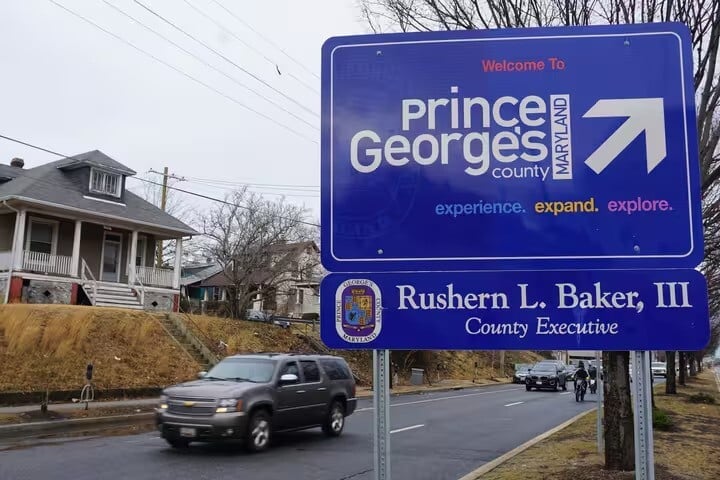
National Water Service provides professional water treatment services throughout Prince George’s County, MD — from Bowie, Laurel, and College Park to Upper Marlboro, Waldorf-adjacent communities, and the rural southern part of the county. Prince George’s County shares WSSC Water with Montgomery County, making it one of two counties served by this bi-county utility — but the water conditions, infrastructure age, and treatment needs can be quite different on the Prince George’s side.
In addition to Prince George’s County, we provide expert water treatment across Maryland, Washington DC, and Northern Virginia.
WSSC Water — The vast majority of Prince George’s County receives its drinking water from WSSC Water (Washington Suburban Sanitary Commission), the same bi-county utility that serves Montgomery County. WSSC serves approximately 1.9 million customers across both counties and draws from two sources:
The Bi-County Tunnel (Project 80), which became operational in 2015, carries treated water from the Potomac plant in Montgomery County into Prince George’s County. Some areas of the county receive blended water from both plants. WSSC’s distribution network in Prince George’s County is divided into 28 pressure zones.
WSSC has maintained 107+ consecutive years with zero drinking water quality violations and conducts over 500,000 water quality tests annually. WSSC uses chloramine for disinfection and has proactively increased PFAS monitoring since 2022.
Private Wells — While WSSC covers most of the urbanized areas, some homes in rural southern and eastern Prince George’s County rely on private wells. The county sits on the Atlantic Coastal Plain — the same geological formation as Anne Arundel County — which means well water draws from sandy aquifer systems (Patuxent, Patapsco formations) rather than Piedmont bedrock. Well water quality varies significantly by location, depth, and proximity to agricultural or developed land.
Like Montgomery County, your hardness level depends on which WSSC plant serves your home:
Homes receiving Potomac-sourced water will benefit most from a water softener to eliminate scale buildup, protect appliances, and improve soap performance. A water test confirms your specific hardness level.

WSSC uses chloramine (a chlorine-ammonia compound) for long-lasting disinfection. Many residents notice a chemical taste, particularly in warmer months. Unlike free chlorine, chloramine doesn’t dissipate by sitting in a glass — it requires carbon filtration to remove.
Chloramine treatment can produce trihalomethanes and haloacetic acids as byproducts. These are monitored by WSSC and remain within EPA limits, but some homeowners prefer additional carbon filtration or reverse osmosis for extra reduction.
Potomac-sourced WSSC water at 120–130 mg/L causes scale in water heaters, spots on glassware, and reduced soap effectiveness. A water softener is one of the most impactful upgrades for affected homes.
Prince George’s County has older neighborhoods where plumbing materials, service lines, or solder may contain lead. WSSC’s 2023 sampling found 90% of tested homes had lead below 2.0 ppb (well under the EPA action level of 15 ppb), but homes with pre-1986 plumbing should consider a reverse osmosis system at the kitchen tap for drinking water protection. WSSC’s “What’s Your Pipe Type?” program helps identify lead service lines ahead of the EPA’s 2037 replacement deadline.
WSSC proactively increased PFAS monitoring from 18 to 29 compounds starting in September 2022, going above and beyond federal and state requirements. Results indicate very low levels. For additional home-level protection, reverse osmosis is the most effective treatment.
Homes on private wells in the Coastal Plain portion of the county can experience iron staining, low pH (acidic water), and bacteria concerns. Treatment: iron breaker, acid neutralizer, and UV disinfection.
While WSSC serves the majority of the county’s urbanized areas, homes in rural southern and eastern Prince George’s County rely on private wells. Unlike the Piedmont counties to the north and west, Prince George’s County sits on the Atlantic Coastal Plain — a wedge of unconsolidated sand, gravel, and clay sediments that thickens toward the southeast. Well water here draws from the Patuxent and Patapsco aquifer systems.
Common well water issues in Prince George’s County include:
The Maryland Department of the Environment recommends annual testing for all private wells. We provide free basic in-home water testing and can coordinate comprehensive lab analysis when needed.
If you’re experiencing low water pressure or suspect your well pump or pressure tank may be failing, our well pump services team can diagnose and repair the issue — often the same day.

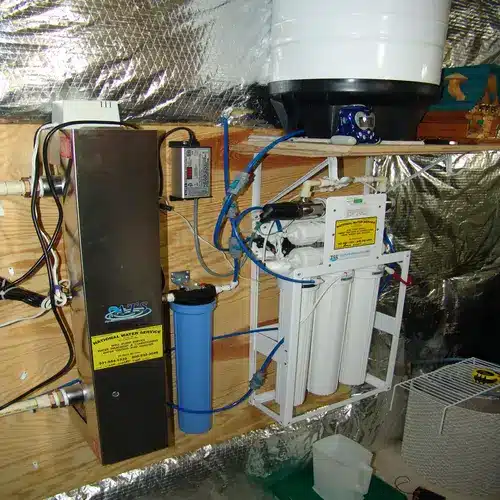
Every system we install is selected based on your water test results, household size, and plumbing configuration. We use non-proprietary equipment. Common solutions for Prince George’s County homes include:
We handle installation, annual maintenance and emergency service across Prince George’s County. Our office is in Woodbine, MD.
View our full range of water treatment services or browse our before-and-after installation gallery.
We provide water treatment, well pump services, and plumbing services throughout Prince George’s County, MD, including:
In addition to Prince George’s County, we provide expert water treatment across Maryland, including Montgomery County, Howard County, Frederick County, Carroll County, Baltimore County, Anne Arundel County, Loudoun County, VA, Fairfax County, VA, and Washington, DC.
Yes — WSSC has maintained zero drinking water quality violations for over 107 years and conducts more than 500,000 tests annually. However, chloramine taste, hard water scale, and concerns about aging infrastructure lead many PG County homeowners to add carbon filtration and water softeners for improved water quality at the tap.
If your home receives Potomac River-sourced WSSC water, hardness averages 120–130 mg/L — enough to cause scale and reduce appliance life. Homes on Patuxent-sourced water are softer. A water test confirms your specific level.
WSSC’s 2023 sampling showed 90% of homes below 2.0 ppb — well under the EPA’s 15 ppb action level. However, homes with pre-1986 plumbing or unknown service line material should consider a reverse osmosis system for drinking water. WSSC’s “What’s Your Pipe Type?” program can identify your pipe material.
We recommend testing for iron, pH, hardness, bacteria (coliform/E. coli), manganese, and nitrates. The Coastal Plain aquifers in southern Prince George’s County can produce iron and acidic water. Schedule a free test.
Cost depends on the system type and your specific water conditions. We provide free in-home water testing and a detailed estimate before any work begins. Call 301-854-1333 to schedule.

Schedule your free water test today or call 301-781-5866 to speak with a water treatment specialist.