Radon is a radioactive gas that occurs naturally from the decay of uranium in soil and rock. While most homeowners in Maryland and Virginia check for radon in their air, radon in well water is a silent threat that often goes unnoticed.
When you shower, wash dishes, or do laundry, dissolved radon is released into your home’s air—creating a significant inhalation hazard. But is radon in water really dangerous? The short answer is yes.
What Level of Radon in Water is Dangerous?
Many homeowners contact us after receiving lab results, asking: “Is a radon level of 10 dangerous?” or “What is the safe limit?” Because radon in water contributes to radon in the air (the 10,000:1 ratio), the benchmarks for safety are critical:
Under 2,000 pCi/L: Lower risk, but still worth monitoring.
4,000 pCi/L: The EPA’s proposed “Action Level.” If your results are here, you should actively research mitigation.
10,000+ pCi/L: High Risk. At this level, the water alone can push your home’s air quality into the danger zone.
Confused by your lab results? See our guide on how to test well water for radon to understand your report.
Symptoms of Radon Exposure
Radon is colorless, odorless, and tasteless. You won’t know it’s there without a test, but long-term exposure can lead to serious health issues. Radon exposure symptoms often mimic other respiratory problems:
Persistent, dry cough or hoarseness.
Shortness of breath or chest pain.
Recurring respiratory infections like pneumonia or bronchitis.
Significant weight loss or loss of appetite.
Radon is the second leading cause of lung cancer in the U.S. and the leading cause for non-smokers, accounting for over 21,000 preventable deaths per year according to the CDC.
Radon is the second leading cause of lung cancer after smoking
Radon is the leading natural cause of lung cancer for non-smokers in the United States
Radon is the sixth leading cause of all types of cancers
Radon accounts for over 21,000 preventable deaths per year according to the CDC
Radon "Hot Zones" in Maryland and Northern Virginia
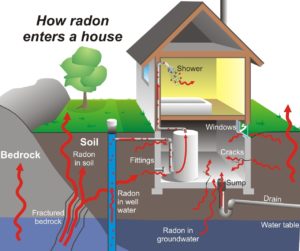
Central Maryland and Northern Virginia have some of the highest concentrations of radon in groundwater in the country. Our team frequently finds very high levels (up to 60,000 pCi/L) in:
Montgomery County (Central Maryland)
Howard County (Western Howard)
Frederick County (Eastern Frederick)
Loudoun County & Falls Church, VA
If your home is built on the Piedmont Province geology, testing well water for radon is not just a recommendation—it is a safety necessity for a healthy home.
How to Handle Radon in Your Water
A professional water company is highly recommended if you fear you have radon in your water. National Water Service is equipped to handle radon water testing, evaluation of levels, and specialized treatment.
The Two Primary Methods for Radon Removal
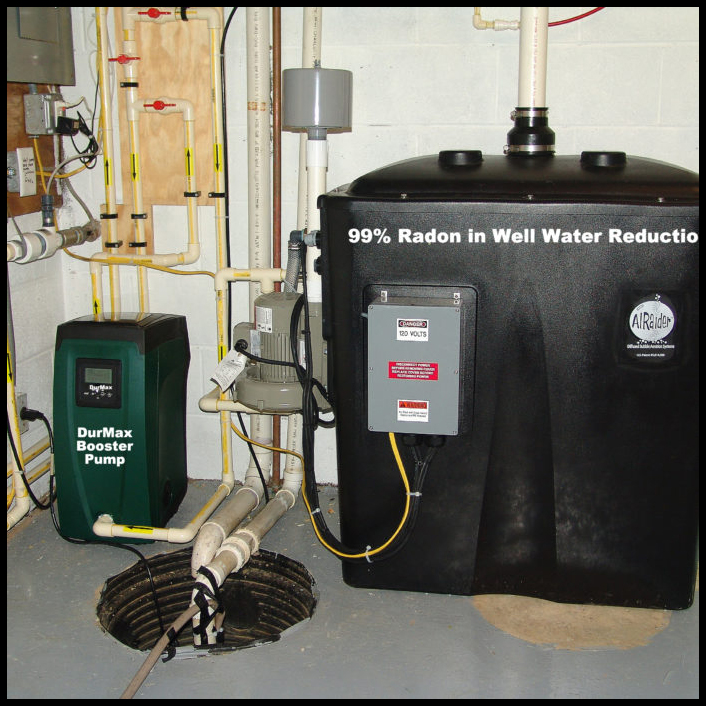
Aeration (The Gold Standard): Systems like the AIRaider™ strip the gas from the water and vent it safely outside. To learn more about the science of air stripping and how it works for other water issues, visit our What is Aerated Water? guide.
Granular Activated Carbon (GAC): Effective for lower levels (under 2,500 pCi/L).
For a full technical breakdown of how these systems differ, read our detailed guide: How to Remove Radon from Water.
Dangers of Radon FAQs
Is radon in water really dangerous?
Yes. While drinking water with radon is a minor risk to your stomach, the real danger is the “Shower Effect.” When water is agitated (showering, washing dishes, or laundry), the radon gas is released into your home’s air, creating a significant inhalation hazard and increasing the risk of lung cancer.
What level of radon in water is considered dangerous?
While the EPA action level for radon in air is 4 pCi/L, water benchmarks are different. Many experts and state agencies recommend professional mitigation if your well water test shows levels above 4,000 pCi/L. If your levels exceed 10,000 pCi/L, the water is contributing roughly 1 pCi/L to your air quality.
How do you get rid of radon in your well water?
The industry “Gold Standard” is Aeration. This process sprays water into a chamber and bubbles air through it to “strip” the radon gas away before venting it safely outdoors. For lower levels (typically under 2,500 pCi/L), a Granular Activated Carbon (GAC) system can be used, though it requires more frequent monitoring.
Can radon be in city (municipal) water?
Radon is almost exclusively a private well concern. Municipal water is usually treated or stored in open-air reservoirs, which allows the radon gas to escape naturally before it ever reaches your faucet. Private wells pull directly from the ground, where the gas remains trapped until it enters your home.
How often should I test my well water for radon?
If you live in a known “Hot Zone” like Montgomery, Howard, Frederick, or Loudoun counties, you should test your water every 1–2 years. Radon levels can shift due to groundwater changes or local seismic activity, so regular verification is the only way to ensure your family’s safety.
Next Steps for a Safe Home
The only way to know whether your home has elevated radon levels is to test your well water. Have your water tested for radon—it could save a life!
Schedule a Test: Professional lab-certified testing confirms your specific pCi/L levels.
View Solutions: Ready to protect your family?
Explore our professional Radon Removal Systems designed specifically for Mid-Atlantic homes.
Give National Water Service a call at 301-854-1333 or contact us online to schedule your radon water test today.