
National Water Service provides professional water treatment services throughout Howard County, MD — from Columbia, Ellicott City, and Elkridge to the rural well-water communities of western Howard County including Woodbine, Glenelg, West Friendship, and Lisbon. Howard County is unique among Maryland counties because it doesn’t operate its own water treatment plants — instead, it purchases all of its treated water from two separate suppliers, creating a split water quality landscape across the county.
In addition to Howard County, we provide expert water treatment across Maryland, Washington DC, and Northern Virginia.
Howard County operates as a “consecutive water system” — it doesn’t treat any water itself but purchases finished drinking water from two suppliers and distributes it through the county’s own pipe network. Which supplier serves your home depends on where you live:
Baltimore City (approximately 75% of the county) — The majority of Howard County’s public water comes from Baltimore City’s reservoir system. Baltimore City draws from three major surface water sources:
Baltimore City supplies approximately 18–19 million gallons per day (MGD) to Howard County. This water is treated at Baltimore City’s filtration plants before entering Howard County’s distribution system.
WSSC Water (approximately 25% of the county) — If you live in the North Laurel area — east of Interstate 95 and south of Patuxent Range Road — your water comes from the Washington Suburban Sanitary Commission (WSSC). WSSC draws from the Potomac River and the Patuxent River and supplies approximately 4–5 MGD to this portion of Howard County.
This split matters for treatment because the two sources have different water chemistry. Baltimore City reservoir water tends to be harder and has documented issues with disinfection byproducts (haloacetic acids and trihalomethanes). WSSC water from the Potomac is also hard (120–130 mg/L) while Patuxent-sourced WSSC water is softer (60–65 mg/L). Knowing which system serves your home is the first step toward choosing the right treatment.
Private Wells — The western portion of Howard County is largely rural, and many homes in this area rely on private wells and septic systems. The county’s Bureau of Utilities distribution system is concentrated in the eastern half of the county (the Metropolitan Services District). If your home is west of Route 32, there’s a good chance you’re on well water.
Water hardness is one of the most common concerns for Howard County homeowners, and the level depends on which supplier serves your home.
Baltimore City’s water — which supplies about 75% of Howard County — originates from surface reservoirs and carries dissolved minerals. Baltimore City’s water is classified as hard, with hardness levels reported at approximately 185 mg/L (PPM) in some measurements. However, levels delivered to Howard County may vary depending on seasonal conditions and which reservoir is the primary source at any given time.
WSSC-supplied areas (North Laurel) receive Potomac River water at approximately 120–130 mg/L (hard) or Patuxent River water at 60–65 mg/L (soft), depending on the blend.
Private wells in western Howard County draw from Piedmont bedrock and can range from moderately hard to very hard depending on local geology, particularly in areas with limestone or carbonate rock.
In all cases, hard water causes scale buildup inside water heaters (reducing efficiency by 25–40%), leaves white deposits on fixtures and showerheads, spots on glassware, and makes soap and detergent less effective. A properly sized water softener is one of the most impactful upgrades for Howard County homes — and one of our most frequently installed systems here.
Water hardness is one of the most common concerns for Howard County homeowners, and the level depends on which supplier serves your home.
Baltimore City’s water — which supplies about 75% of Howard County — originates from surface reservoirs and carries dissolved minerals. Baltimore City’s water is classified as hard, with hardness levels reported at approximately 185 mg/L (PPM) in some measurements. However, levels delivered to Howard County may vary depending on seasonal conditions and which reservoir is the primary source at any given time.
WSSC-supplied areas (North Laurel) receive Potomac River water at approximately 120–130 mg/L (hard) or Patuxent River water at 60–65 mg/L (soft), depending on the blend.
Private wells in western Howard County draw from Piedmont bedrock and can range from moderately hard to very hard depending on local geology, particularly in areas with limestone or carbonate rock.
In all cases, hard water causes scale buildup inside water heaters (reducing efficiency by 25–40%), leaves white deposits on fixtures and showerheads, spots on glassware, and makes soap and detergent less effective. A properly sized water softener is one of the most impactful upgrades for Howard County homes — and one of our most frequently installed systems here.
Howard County’s Bureau of Utilities conducts water quality testing at over 150 locations throughout its distribution system and publishes annual reports confirming that water generally meets federal standards. However, meeting regulatory limits and having ideal water at the tap are two different things.
This is the most significant documented water quality concern for Howard County homes on Baltimore City supply. Third-party testing has found that Howard County’s water contains haloacetic acids — disinfection byproducts formed when chlorine reacts with organic matter in the surface water. While levels remain within EPA legal limits, they exceed more conservative health guidelines recommended by independent scientists. Carbon filtration throughout the whole house and reverse osmosis at the kitchen tap are the most effective treatments for reducing these byproducts.
Both Baltimore City and WSSC use chlorine-based disinfection. Many Howard County residents notice a chemical taste, particularly in warmer months. A whole-house carbon filtration system removes chlorine taste and odor from every tap.
As detailed above, most of Howard County receives hard water regardless of the source. Scale buildup in water heaters, dishwashers, and on fixtures is the most common complaint we hear from Columbia and Ellicott City homeowners. A water softener eliminates these issues.
Ellicott City’s Historic District, parts of Elkridge, and older Columbia-era homes from the 1960s–70s may have plumbing materials that affect water quality at the tap — including copper pipes that can leach metals when water is acidic, and older solder containing lead. A reverse osmosis system at the kitchen provides effective reduction of lead and other metals in drinking water.
Liberty Reservoir’s 163-square-mile drainage area includes portions of Carroll County and Baltimore County with mixed land use. Runoff from impervious surfaces and stormwater flows can affect raw water quality before treatment, particularly during wet seasons.
The western half of Howard County — roughly everything west of Route 32 — is predominantly rural. Homes in communities like Woodbine, Glenelg, West Friendship, Lisbon, Cooksville, Dayton, and Highland rely on private wells and septic systems rather than the county’s public water distribution.
Private wells in western Howard County draw from the Piedmont Plateau bedrock that underlies 90% of the county. Common well water issues we see in this area include:
The Howard County Health Department recommends annual testing for all private wells. We provide free basic in-home water testing and can coordinate comprehensive lab analysis when needed.
If you’re experiencing low water pressure or suspect your well pump or pressure tank may be failing, our well pump services team can diagnose and repair the issue — often the same day.
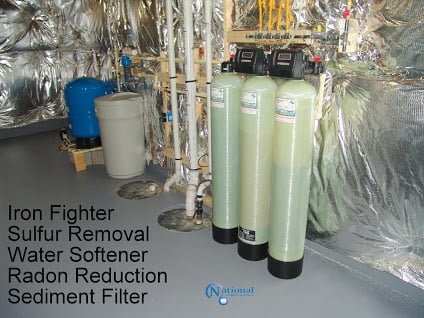
very system we install is selected based on your water test results, household size, and plumbing configuration. We use non-proprietary equipment — meaning you’re never locked into a single brand for parts or service. Common solutions for Howard County homes include:
We handle installation, annual maintenance and emergency service across Howard County. Our office is in Woodbine, MD — right in western Howard County.
View our full range of water treatment services or browse our before-and-after installation gallery to see real results from homes like yours.
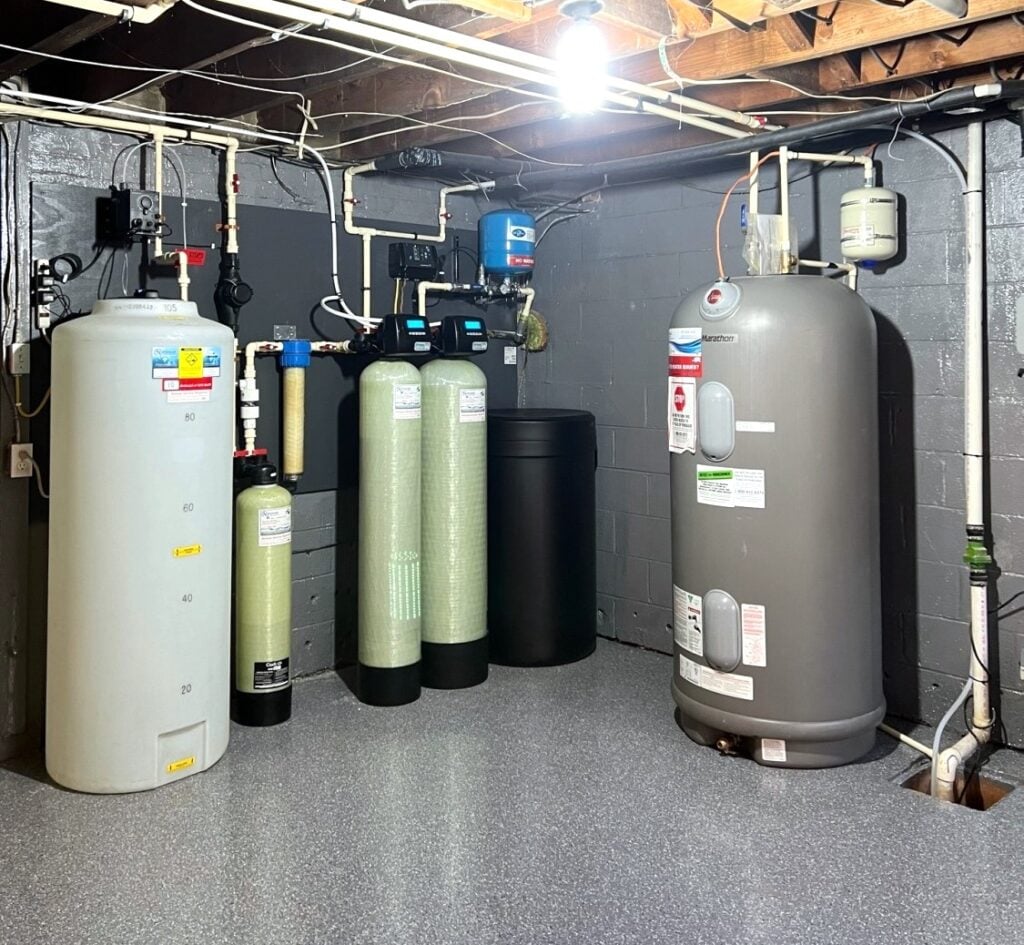
We provide water treatment, well pump services, and plumbing services throughout Howard County, MD, including:
In addition to Howard County, we provide expert water treatment across Maryland, including Montgomery County, Frederick County, Carroll County, Baltimore County, Anne Arundel County, Prince George’s County, Loudoun County, VA, Fairfax County, VA, and Washington, DC.
Howard County’s Bureau of Utilities tests water at over 150 locations throughout its distribution system, and results generally meet federal standards. However, third-party testing has identified haloacetic acids (HAA5) and trihalomethanes (TTHMs) — chlorine disinfection byproducts — at levels that, while legal, exceed more conservative health-based guidelines. For families who want the highest quality drinking water, carbon filtration and reverse osmosis provide additional protection.
If you live in the North Laurel area, east of I-95 and south of Patuxent Range Road, your water comes from WSSC. Everyone else on public water in Howard County receives water purchased from Baltimore City. The two sources have different water chemistry, so knowing which one serves your home helps determine the best treatment approach. Not sure? We can confirm during your free water test.
Hardness levels vary depending on whether your home is supplied by Baltimore City or WSSC sources, but mineral buildup and scaling are common in many homes.
Very likely, yes. Baltimore City supply water is hard (up to 185 mg/L in some measurements), and WSSC Potomac-sourced water averages 120–130 mg/L. Both are high enough to cause scale in water heaters, spots on glassware, and reduced soap effectiveness. A water test will confirm your exact hardness level.
We recommend testing for hardness, pH, iron, manganese, bacteria (coliform/E. coli), nitrates, radon, and sediment at minimum. Western Howard County’s Piedmont geology produces variable water conditions — hard water and low pH are particularly common. Schedule a free water test to find out what’s in your water. If you’re also experiencing pressure or flow issues, our well pump team can inspect your system.
Haloacetic acids (HAA5) are byproducts of chlorine disinfection — they form when chlorine reacts with organic matter in the source water. Baltimore City’s surface water sources have relatively high organic matter content, which contributes to elevated HAA5 levels. While levels remain within EPA legal limits, some health organizations recommend lower exposure. A whole-house carbon filter reduces these byproducts, and a reverse osmosis system at the kitchen tap provides the most thorough reduction for drinking water.
Yes — we provide water treatment services to over 24 communities throughout Howard County. See our full list of service areas above. Our office is in Woodbine, MD — right in Howard County. Contact us to confirm service availability.
Cost depends on the system type and your specific water conditions. A water softener for a Columbia townhome is a different investment than a multi-stage whole-house system for a western Howard County well. We provide free in-home water testing and a detailed estimate before any work begins — no pressure, no obligation. Call 301-854-1333 to schedule.

Schedule your free water test today or call 301-781-5866 to speak with a water treatment specialist.