
When it comes to achieving the highest level of water purity, a whole house reverse osmosis system is the ultimate solution. Unlike a standard under-sink filter that only provides purified water at a single kitchen tap, a whole-house system treats every drop of water entering your home.
Whether you are dealing with high mineral content, nitrates, or complex chemical contaminants like PFAS, these systems provide a “total home” barrier. However, they are a significant technical addition to your plumbing. Below, we break down the honest pros and cons of owning whole house reverse osmosis systems.
Quick Answer: Whole House RO Pros & Cons
✅ Pros: Removes 98% of TDS, eliminates PFAS, protects appliances, better skin and hair
❌ Cons: High upfront cost (starts at $2,000), requires storage tank, water waste, needs pre-treatment, aggressive pH
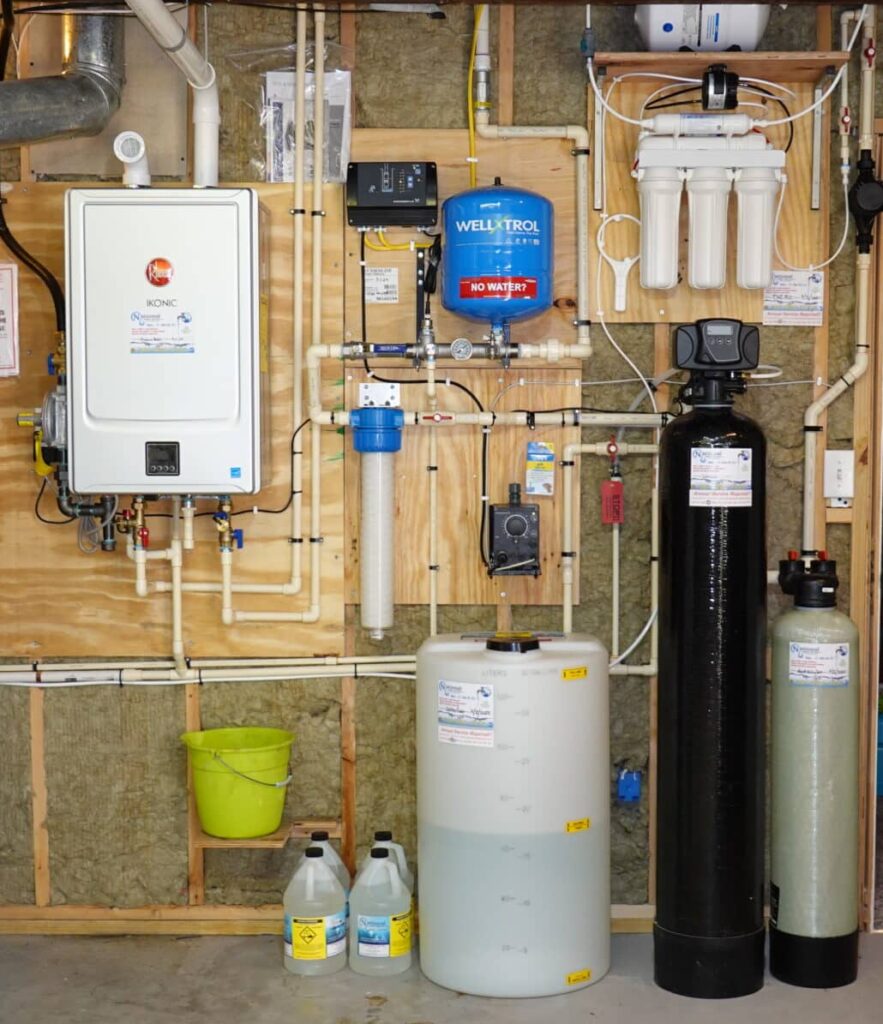
The Pros: Why Total Purity Wins
1. Comprehensive Contaminant Removal
Reverse Osmosis (RO) is widely recognized as the most powerful filtration technology available for residential use. It removes up to 98% of Total Dissolved Solids (TDS), effectively stripping away:
Nitrates, Sulfates, and Chlorides
Lead, Arsenic, and Uranium
PFAS (“Forever Chemicals”)
Fluoride
2. Maximum Appliance Protection
By removing the minerals that cause hard water scale, a whole-house RO system keeps your water heater, dishwasher, and high-end fixtures in pristine condition. This can significantly extend the lifespan of any appliance that uses water.
Showering in RO water is a massive benefit for skin and hair health. Without the presence of minerals or chemicals like chlorine, your skin stays hydrated and your hair remains softer and more manageable.
3. The "Pure Water" Experience at Every Tap
Showering in RO water is a massive benefit for skin and hair health. Without the presence of minerals or chemicals like chlorine, your skin stays hydrated and your hair remains softer and more manageable.
The Cons: The Technical Reality
1. "Aggressive" Water and pH Balance
RO water is so pure that it can become slightly acidic and “aggressive.” If left untreated, this water can leach copper and lead from your home’s internal plumbing.
The Solution: A professional installation must include a post-treatment remineralizer or acid neutralizer to balance the pH and protect your pipes.
2. Space and Storage Requirements
Unlike a standard tank-style filter, a whole house reverse osmosis system is a multi-part assembly. It requires space for the RO membrane unit, a large atmospheric storage tank (typically 200–500 gallons), and a booster pump to re-pressurize the water for your home.
3. Water Waste and Pre-Treatment
To create pure water, the system must flush a portion of water (brine) down the drain. Additionally, you cannot run raw groundwater directly into an RO membrane. To prevent premature membrane failure, you almost always need a ‘bodyguard’ system. To understand which pre-treatment is right for your home’s chemistry, see our comparison of an inline filter vs. water softener.
| Feature | Standard Whole Home Filter | Whole House Reverse Osmosis |
|---|---|---|
| Primary Goal | Remove chemicals, taste, & odor | Remove 98% of all dissolved solids |
| Removes TDS? | No | Yes (Salts, Nitrates, Metals) |
| Removes PFAS? | Partially (Carbon based) | Yes (Absolute barrier) |
| Water Waste | None | Low (requires brine discharge) |
| Maintenance | Annual filter changes | Membrane every 2-4 years |
| Best For | City water / Light well issues | High-TDS or contaminated wells |
How Much Does a Whole House Reverse Osmosis System Cost?
A whole house RO system is a significant investment compared to standard whole-home filtration. In the DMV area, whole house RO systems start at $2,000 installed, with most homes budgeting between $3,000 and $8,000 depending on system size, pre-treatment requirements, and storage tank capacity.
Here’s what drives the cost:
- The RO unit and membrane — the core system
- Storage tank (200–500 gallons) — required for whole-house flow rates
- Pre-treatment system — almost always needed to protect the membrane (sediment filter, softener, or iron filter depending on your water)
- Post-treatment remineralizer — required to neutralize pH and protect your pipes
- Labor and installation — more complex than a standard filter install
Ongoing costs include membrane replacement every 2–4 years and annual pre-filter changes. When you factor in appliance longevity, reduced plumbing repairs, and no bottled water costs, most homeowners find the system pays for itself over time.
Not sure if your water quality justifies the investment? Get a water test or explore our Reverse Osmosis service page to learn more.
Want a full breakdown by system type? See our complete Reverse Osmosis System Cost Guide.
Is a Whole House Reverse Osmosis System Right for You?
Not every home needs a whole house RO system — and as water treatment professionals, we’ll always tell you honestly whether you do or don’t.
A whole house RO system is the right choice if you have:
- Well water with high TDS, nitrates, arsenic, or uranium
- Confirmed or suspected PFAS (“forever chemical”) contamination
- High levels of lead, sulfates, or chlorides that standard filters can’t resolve
- Multiple failed water tests showing complex chemical contamination
- A desire for absolute purity at every tap — drinking, cooking, bathing, and laundry
You likely don’t need it if:
- You’re on city/municipal water with normal TDS levels — a whole home carbon filter or water softener will solve most city water issues at a fraction of the cost
- Your only concern is taste and odor — a carbon tank handles this effectively
- You have hard water only — a water softener is the more efficient and cost-effective solution
- You have a single contaminant like iron or sulfur — a targeted system will outperform RO for that specific problem
Not sure which category you fall into? Schedule a water test and we’ll give you a straight answer — no upselling, no guesswork.
Common Water Issues We See Across the DMV
After 47 years of testing and treating water across Maryland, Washington DC, and Northern Virginia, we see distinct water quality patterns by region.
Maryland Well Water (Carroll, Frederick, Howard, Montgomery Counties): High nitrate levels are extremely common, particularly in agricultural areas of Carroll and Frederick County. These nitrates are invisible, odorless, and cannot be removed by standard filters — RO is the only residential solution. Iron and hardness are also prevalent throughout Howard and Montgomery County well systems.
Washington DC & Northern Virginia (Loudoun, Fairfax, Prince William Counties): Most DC and NoVA homes are on municipal water, meaning a whole house RO is rarely necessary. However, aging infrastructure in parts of DC and older NoVA neighborhoods means lead from internal plumbing is a real concern — and RO provides an absolute barrier against it.
Anne Arundel & Baltimore County: Homes here often face a combination of hard water and chloramine (used instead of chlorine by local utilities), which requires a different pre-treatment approach than standard carbon filtration.
In each case, the right system depends entirely on your specific water chemistry — which is why we always start with a water test before recommending anything.
Whole House Reverse Osmosis FAQ
Does a whole house RO system remove beneficial minerals too?
Yes. RO technology is non-selective, meaning it removes both harmful contaminants and beneficial minerals like calcium and magnesium. This results in “soft” water that is free of scale-causing minerals, though many homeowners choose to add a remineralization cartridge to add healthy minerals back into the drinking water.
How long do whole house RO membranes last?
On average, a high-quality RO membrane lasts between 2 to 4 years. However, this lifespan depends heavily on your pre-treatment setup. If you have hard water, high iron, or sediment and you are not using a water softener or sediment pre-filter to protect the membrane, it can foul in as little as six months. This is why we never install a whole house RO system without first designing the right pre-treatment stack for your specific water chemistry. A properly protected membrane running on well-conditioned water will consistently hit the 3–4 year mark and sometimes beyond.
Can I run my whole house RO system into my existing plumbing?
Yes, but with one critical requirement: pH Neutralization. Because RO water is stripped of all minerals, it becomes slightly acidic and “aggressive.” Without treatment, this water will slowly leach copper and lead from your home’s existing pipes — which defeats the entire purpose of installing a purification system. Every professional whole house RO installation must include a post-treatment remineralization or acid neutralization stage to stabilize the pH before the water enters your plumbing. This is non-negotiable and is standard practice for every system we install.
What is the difference between an RO system and a whole house water filter?
A standard whole home water filtration system — typically a carbon tank or inline carbon block — removes chemicals like chlorine, chloramine, sulfur, and pesticides while leaving dissolved minerals in the water intact. It improves taste and odor effectively. A reverse osmosis system goes several steps further, using a semi-permeable membrane to physically block almost all dissolved solids, including salts, heavy metals, nitrates, PFAS, and fluoride. For most city water homes, a whole home filter is sufficient. For contaminated well water or high-TDS situations, RO is the appropriate solution.
Do I need a storage tank for a whole house RO system?
Yes, and this is one of the most important — and most overlooked — aspects of whole house RO design. Because reverse osmosis membranes produce water slowly, the system cannot keep up with the instantaneous demand of a whole home. A large atmospheric storage tank — typically 200 to 500 gallons depending on household size — acts as a reservoir that fills gradually and is ready to supply the home during high-demand periods, such as multiple showers running simultaneously or filling a bathtub. The tank is pressurized by a booster pump before the water re-enters your home’s plumbing. Proper tank sizing is critical — an undersized tank is one of the most common mistakes in DIY or improperly designed whole house RO installations.
The Verdict: Is It Worth It?
If your water supply has complex chemical issues, extremely high TDS, or you simply want the peace of mind that comes with the highest level of filtration, a whole-house RO is a life-changing investment. However, for many homes, a specialized inline filtration stack is a more efficient and cost-effective choice.
Ready to find the perfect fit for your home? * Explore our Reverse Osmosis Service Page for more technical specs.
View our full range of Water Treatment Services to compare all your options.
About National Water Service
National Water Service has been testing, designing, and installing water treatment systems across Maryland, Washington DC, and Northern Virginia since 1979. With over 47 years of hands-on experience and a team of licensed water treatment professionals, we’ve diagnosed and resolved virtually every water quality issue the DMV region has to offer — from nitrate-heavy Carroll County wells to aging lead pipes in DC neighborhoods.
We are not a national chain or a box-store installer. Every recommendation we make starts with a water test and ends with a system designed specifically for your home’s chemistry.
Licensed | 47+ Years Experience | Serving MD, DC & VA