
BREAKING NEWS:
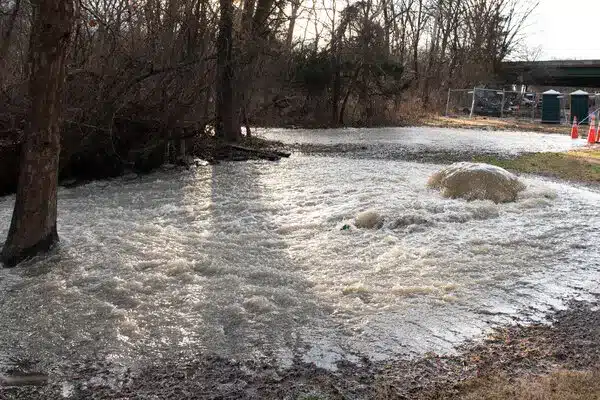
A major sewage spill has released millions of gallons of raw wastewater into the Potomac River, raising serious concerns for homeowners across Maryland, DC, and Northern Virginia.
⚠️ 2026 REPAIR UPDATE: While the initial leak was contained in February, authorities have announced that permanent infrastructure repairs will take 9 months. During this period, the risk of groundwater fluctuations and "Negative Pressure Transients" in aging pipes remains high. Regular bacteria testing is recommended through the end of 2026.
If you live in Potomac River Basin, Montgomery County, Howard County, Fairfax County, or Loudoun County—especially if you rely on a private well—you might be asking: “Is my water safe to drink?”
While municipal water treatment plants are working overtime to contain the contamination, the risk of E. coli and Coliform Bacteria entering groundwater sources is real. Here is what you need to know to protect your family whether you are on city water or well water.
Here is the latest status on water safety for Montgomery, Fairfax, and Prince George’s Counties.
What Happened? (The Spill Explained)
According to recent reports from WJLA and NPR, a broken sewer main has caused a massive discharge of untreated sewage into the Potomac. This river is not just a landmark; it is a primary water source for the entire DMV region.
Current Status:
City Water: No official “Boil Water Advisory” is in effect for WSSC or DC Water customers at this time.
River Status: UNSAFE. Authorities warn to avoid all contact with the Potomac River due to high E. coli levels.
Well Water: AT RISK. Private wells near the river basin (Potomac, Great Falls, Poolesville) are not protected by city treatment and should be tested immediately.
Who Is Most Affected?
Maryland: Residents in Potomac, Bethesda, and Poolesville (especially well owners near the river).
Northern Virginia: Great Falls, McLean, and Sterling (areas with older wells and high water tables).
Washington DC: City residents relying on the aqueduct system.
Why This Matters for You:
City Water Users: Municipal plants increase chlorine levels to kill bacteria, but large spills can overwhelm systems, leading to potential “Boil Water Advisories.”
Well Water Users: This is the bigger danger. If you live in a flood zone or near the river, contaminated surface water can seep into your aquifer, bypassing natural filtration.
More about Well Water vs City Water
Why You Should Be Concerned (Even Without an Advisory)
Just because your phone hasn’t buzzed with a “Boil Water Advisory” yet doesn’t mean your water is pristine. There are two major risks that official alerts often miss:
1. The “Notification Gap” (The 24-Hour Lag) Water testing is not instant. It typically takes 24 to 48 hours for labs to confirm the presence of E. coli. By the time authorities issue a “Boil Water Advisory,” the contaminated water has likely already been in your pipes—and your glass—for a full day. Acting after the advisory is issued means you’ve already been exposed. For total property protection that blocks pathogens at every tap, see our Whole House Reverse Osmosis Systems: Pros and Cons guide.
The Reality: You act after you’ve been exposed. Installing a barrier (like UV or RO) protects you during that gap. Check out our water treatment options.
2. The “Chemical Cocktail” (Beyond Bacteria) Raw sewage isn’t just biological waste. It contains nitrates, cleaning chemicals, and pharmaceutical residues.
The Problem: While chlorine and boiling kill bacteria, they do not remove chemicals. Even if the city kills the E. coli, you could still be drinking the dissolved chemical remnants of the spill unless you have a filter designed to remove them.
I'm on City Water. Am I Safe?
Many homeowners in DMV assume that because their water is treated at a plant, they are 100% safe. This is a dangerous misconception.
Even if the water leaves the treatment plant clean, it must travel through miles of aging underground pipes to reach your home.
The “Back-Siphonage” Effect: In older neighborhoods like Bethesda or Alexandria, aging pipes are prone to cracks. If there is a water main break, a fire hydrant opening, or a drop in pressure, municipal pipes can act like a vacuum. They can suck in contaminated groundwater (which now contains sewage) through cracks and loose joints.
Chlorine Limitations: While city water ( WSSC and DC Water ) is chlorinated, high loads of organic matter (sewage) can overwhelm the disinfectant, or the chlorine may not be strong enough to kill certain parasites like Cryptosporidium.
The Hidden Risk: E. Coli in Well Water
Raw sewage contains E. coli (Escherichia coli) and Fecal Coliform, bacteria that can cause severe gastrointestinal illness.
If you have a private well Howard, Carroll, or Frederick County (downstream or in the basin) near the river or in a low-lying area, you are at the highest risk. Your well has no municipal treatment plant guarding it. If the Potomac floodwaters or contaminated groundwater reach your aquifer, you could be drinking E. coli directly. If your well casing is cracked, or if the water table rises due to the spill volume, these bacteria can enter your home’s water supply. You cannot taste, smell, or see E. coli, but it can make your family sick.
Signs of Contamination:
-
Sudden cloudiness or turbidity in your water.
-
A change in taste or odor.
-
Unexplained stomach illness in the household.
Beyond E. Coli: The Hidden Pathogens
Recent testing has identified antibiotic-resistant Staph bacteria in the Potomac plume. Unlike standard bacteria, these “superbugs” are harder to neutralize. A professional-grade UV Disinfection System is the industry standard for destroying 99.9% of these advanced pathogens.
How to Protect Your Home
You do not have to wait for a “Boil Water Advisory” to ensure your water is safe. You can install your own barrier of protection.
1. For Well Owners: UV Light Disinfection
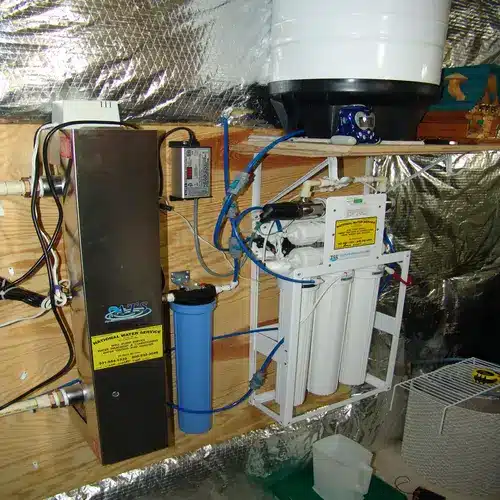
For well owners, a UV (Ultraviolet) System is the gold standard during contamination events.
-
How it works: As water enters your home, it passes through a chamber of UV light. This light scrambles the DNA of bacteria, viruses, and E. coli, neutralizing them instantly.
-
Why it’s better: It acts as a permanent “firewall” for your water. It adds no chemicals and works 24/7.
-
Find out more about UV Water Treatment Systems
2. For City Water: Reverse Osmosis (RO)
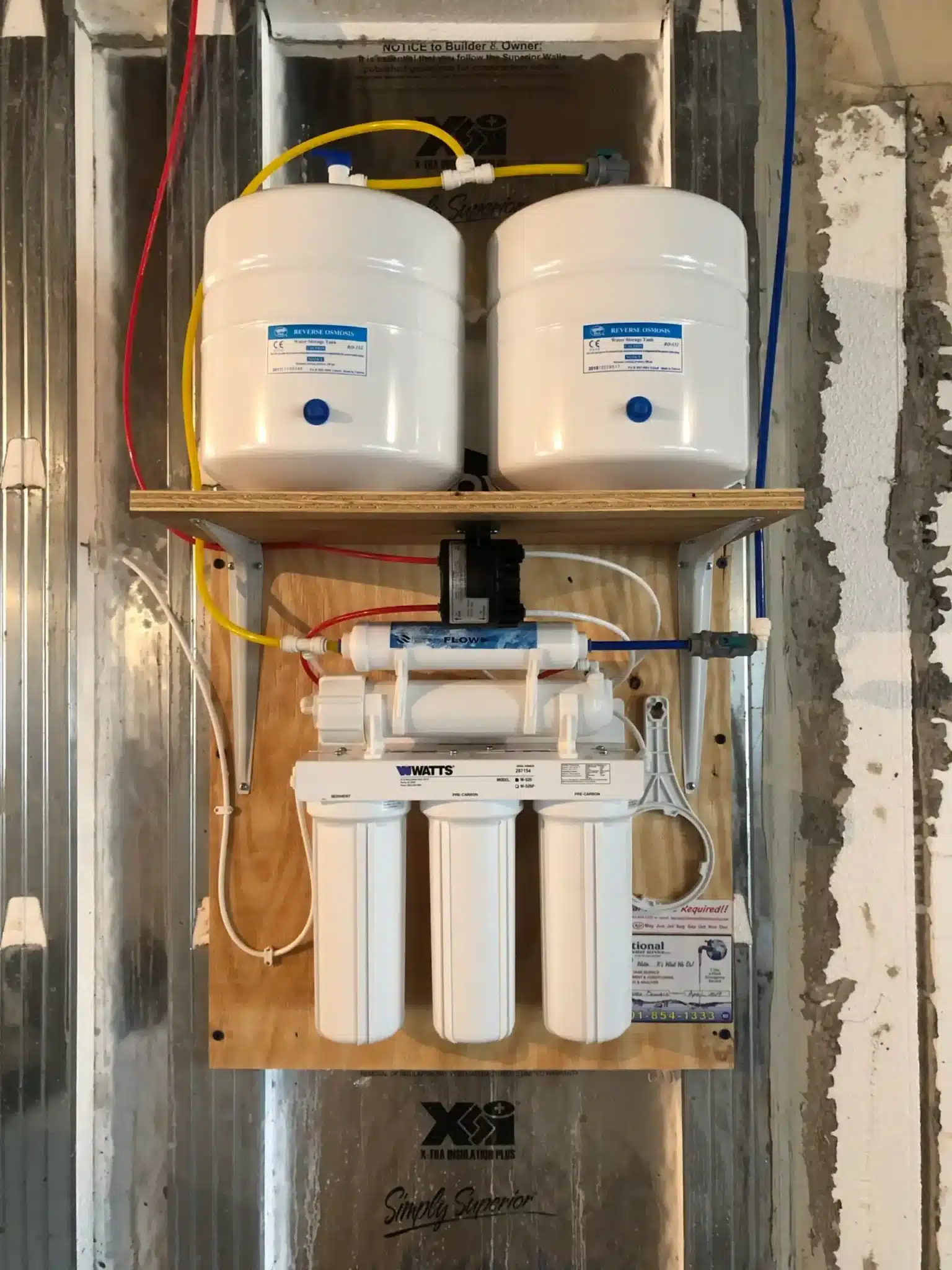
If you are on city water and worried about “sewage byproducts” (like nitrates or pharmaceuticals) that chlorine doesn’t kill, a Reverse Osmosis (RO) system at your kitchen sink is the solution.
-
What it does: Filters out contaminants smaller than bacteria, including lead and drug residues.
-
Why you need it: It protects you from aging city pipe leaks and boil water advisories.
- Find out more about Reverse Osmosis Water Systems
3. Total Protection from Chemical Runoff
While UV kills bacteria, it does not remove the pharmaceutical waste and nitrates found in raw sewage. For total protection, learn if a Whole House Reverse Osmosis System is the right investment for your family.
Don't Guess. Test Your Water.
In light of the recent spill, National Water Service is prioritizing Bacteria & Contamination Testing for local homeowners.
Do not gamble with your health. If you are unsure about your water quality, let us test it.
Step 1: Call 301-479-5341 to schedule a test.
Step 2: We collect a sterile sample and test specifically for Coliform and E. coli.
Step 3: If we find bacteria, we can install a UV System to fix it immediately.
FAQ: Sewage Spill FAQ
Does boiling water really work?
Yes. If you are under a “Boil Water Advisory,” bringing water to a rolling boil for at least one minute will kill E. coli. However, boiling does not remove chemical contaminants or heavy metals.
Can I shower if my water has bacteria?
Generally, yes—as long as you do not swallow the water. However, avoid showering with open wounds, and use boiled/bottled water for brushing teeth.
Will a standard water filter remove bacteria?
No. Most pitcher filters and fridge filters are designed for taste (chlorine removal). They are not fine enough to stop E. coli. You need a UV System or Reverse Osmosis.
Will a standard fridge filter remove E. coli?
No. Fridge and pitcher filters are designed for taste (chlorine). They are not fine enough to stop bacteria. You need a UV System or Reverse Osmosis.
How often should I test my well?
Normally, once a year. However, after a major environmental event like a flood or sewage spill, you should test immediately.
How do contaminants get into city pipes?
Through “Negative Pressure Transients.” If a pipe has a small crack (common in older infrastructure) and the pressure drops, groundwater surrounding the pipe is sucked inside. If that groundwater contains sewage, your tap water becomes contaminated.
Can I smell E. coli in my water?
No. E. coli and other harmful bacteria are microscopic and have no taste, smell, or color. The only way to know if your well has been impacted by the Potomac spill is through a certified bacteria test.
How do contaminants get into city pipes?
Aging infrastructure can experience “Back-Siphonage.” When a water main breaks or a fire hydrant is opened, a drop in pressure can suck contaminated groundwater—now containing sewage—into municipal pipes through cracks and loose joints.
Secure Your Home’s Water Today
The Potomac River spill is a wake-up call for DMV, but you don’t have to live in fear of what comes out of your tap. Whether you rely on a private well or aging city infrastructure, National Water Service has the technology to keep your water sterile and safe.
We are currently deploying extra technicians to Montgomery, Fairfax, and Loudoun Counties for emergency testing.
Don’t Wait for a Boil Water Advisory.
City Water: Lock out contaminants with Reverse Osmosis.
Well Water: Kill bacteria instantly with UV Disinfection.