Lead in Water: Health Effects, Signs, and Professional Solutions

Lead in drinking water is a critical reality for families across the DMV. In 2018, it was reported that students at 90 Montgomery County public schools were exposed to lead concentrations higher than the EPA’s “action level” of 15 parts per billion.

At National Water Service, we believe the best defense is a good offense. Understanding the health effects of lead in water and knowing the signs of lead in water are the first steps toward securing your home’s safety.

Common Signs of Lead in Water

Because lead is colorless, odorless, and tasteless, you cannot rely on your senses to detect it directly. Instead, you must look for the “symptoms” of the conditions that cause lead to leach into your water supply.

The most common driver of lead contamination in Maryland and Virginia is acidic water. If your water has a low pH, it acts as a solvent, eating away at lead solder and brass fixtures. Look for:

  • Blue-Green Staining: A clear indicator that corrosive water is dissolving your copper pipes and lead-based solder.

  • Metallic Taste: A bitter or “tinny” flavor often caused by high concentrations of dissolved metals.

  • Frequent Pinhole Leaks: Evidence that your pipe walls are thinning due to active corrosion.
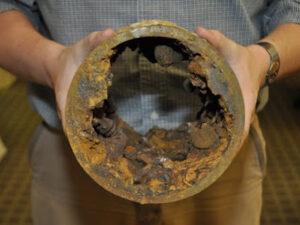
A person holds a heavily corroded pipe with significant rust and deposits inside, highlighting severe internal damage and blockage caused by the effects of lead in water.

Serious Health Effects of Lead in Water

There is no known safe level of lead exposure. As a potent neurotoxin, the health effects of lead in water can be severe and permanent:

  • For Children: Developing bodies are the most vulnerable. Exposure can lead to learning disabilities, behavioral issues, and impaired growth.

  • For Pregnant Women: Lead poses serious developmental risks to the fetus and increased risk of premature birth.

  • For Adults: Long-term exposure is linked to kidney damage, high blood pressure, and reproductive health issues.

Changes to Lead in Water Laws

n 1991, the EPA’s new Lead and Copper Rule began requiring municipal or public water systems to test for lead regularly. If more than 10% of homes tested have lead concentrations higher than the EPA’s “action level,” the public must be informed via social media, TV, or radio.

Revisions to the Safe Drinking Water Act in 2014 made it illegal to install any pipe, fixture, or fitting that is not “lead-free” (containing no more than 0.2 percent lead). However, in 2016, USA Today reported that 2,000 water systems across all 50 states had excessive lead contamination, supplying water to 6 million people. Per the act, older homes remain the most likely to have plumbing fixtures containing lead.

How to Test for Lead in Water

Don’t guess when it comes to your family’s safety. The only way to confirm the presence of lead is through a professional laboratory analysis.

If you are wondering how to test for lead in water, National Water Service provides comprehensive lead and copper water testing. Unlike “DIY” hardware store kits, our professional tests identify exact concentrations and the underlying water chemistry (like pH levels) that causes the problem.

The 3 Professional Solutions to Fix Lead in Water

As your local water specialists, we provide three engineered solutions to manage and eliminate lead:

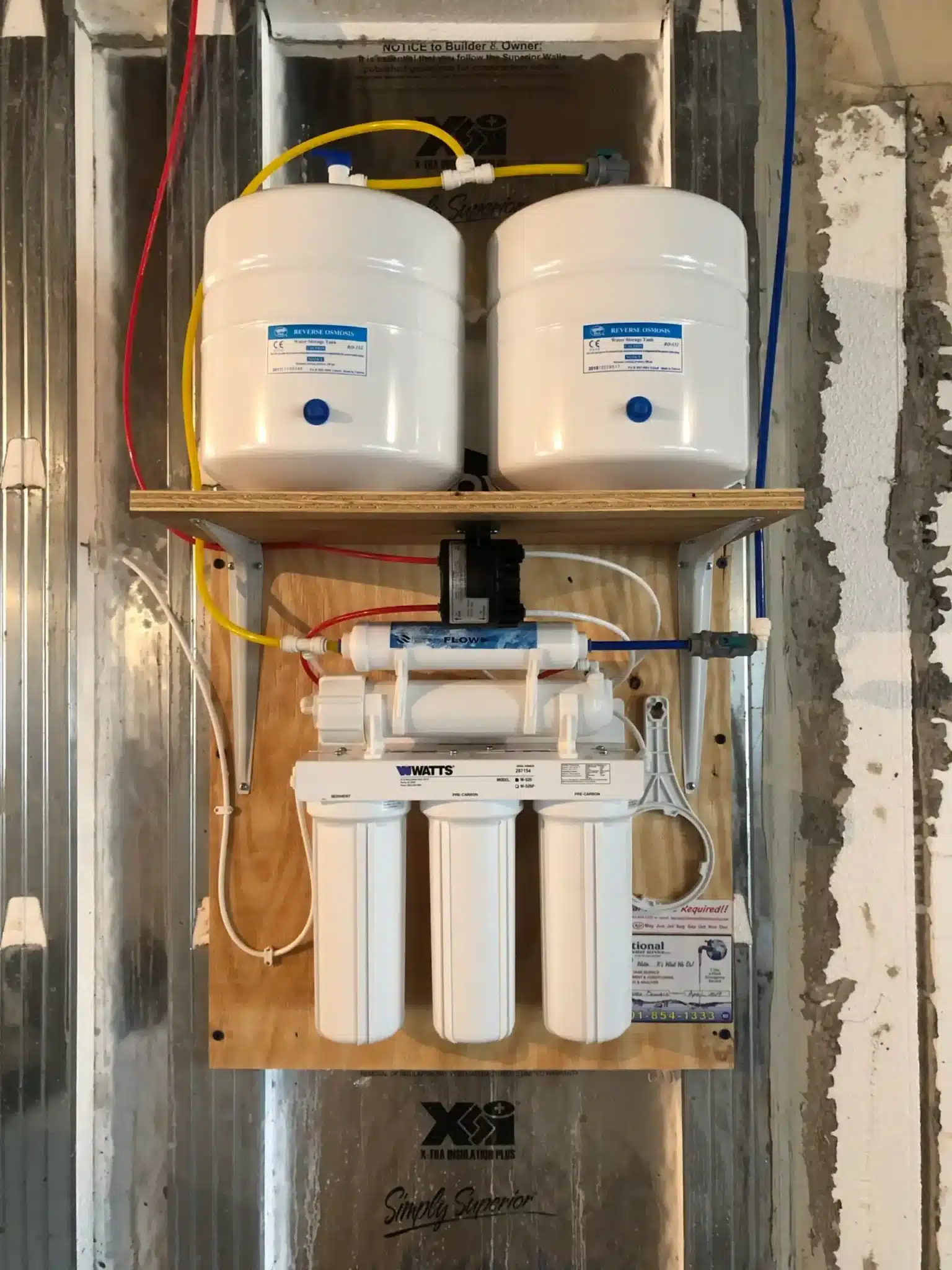
1. Reverse Osmosis (The "Removal" Solution)

If lead is already present at your tap, Reverse Osmosis (RO) is the gold standard. It uses a high-pressure membrane to physically strip lead molecules from the water.

A wall-mounted reverse osmosis water filtration system with three vertical filter cartridges below two white water storage tanks, connected by colored tubing, installed on a wooden board in a partially finished room.

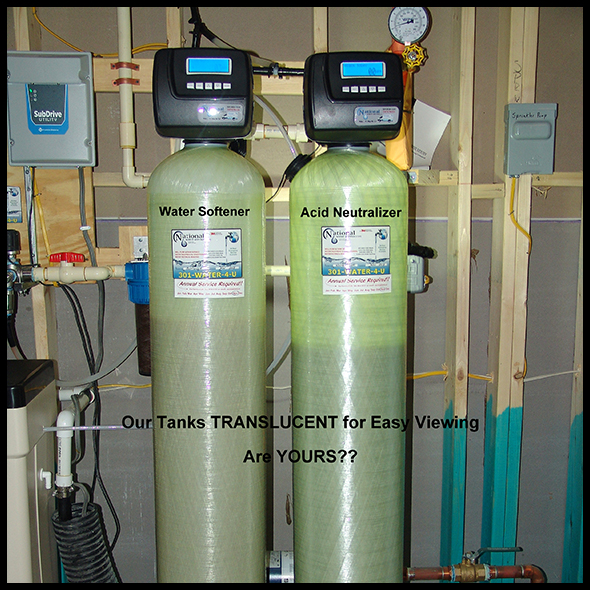
2. Acid Neutralizers (The "Prevention" Solution)

The best way to stop lead in a well-water home is to treat the acidic water that causes leaching. A whole-house acid neutralizer buffers your pH, making the water non-corrosive so it stops eating your pipes and fixtures.

  • Best For: Stopping lead leaching before it even starts.

Two large, translucent tanks labeled Water Softener and Acid Neutralizer stand side by side in a basement with pipes and control panels. Text below reads, Our Tanks TRANSLUCENT for Easy Viewing. Are YOURS??.

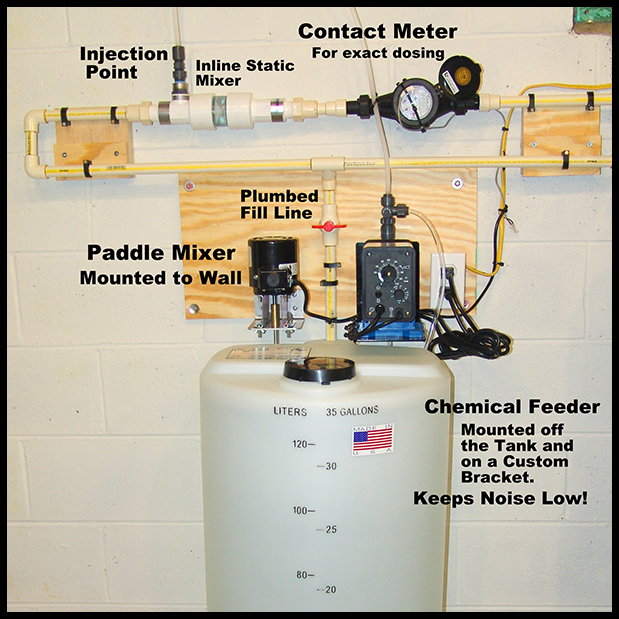
3. Chemical Feeders (The "Precision" Solution)

For homes with extreme acidity or complex mineral issues, a Chemical Solution Feeder can be used to inject a precise buffer like soda ash. This balances the pH and can create a protective barrier inside your pipes to seal off old lead solder.

  • Best For: Precise control in commercial properties or homes with extreme pH fluctuations.

A Water Treatment Equipment setup features labeled parts: injection point, inline static mixer, contact meter, wall-mounted paddle mixer, plumbed fill line, and a 35-gallon tank on a custom bracket.

FAQ: Lead in Water

Can I see, smell, or taste lead in my water?

No. Lead is completely invisible and has no scent or taste. This is why it is often called a “silent” contaminant. You cannot rely on your senses to detect it; only a professional water test can confirm its presence.

No. Boiling your water will actually increase the concentration of lead. As the water evaporates during boiling, the lead remains behind, meaning there is more lead per cup of water than before you started.

Prior to 1986, lead-based solder was the industry standard for joining copper pipes. Additionally, many older fixtures and “gooseneck” service lines were made primarily of lead. In 2014, laws were updated to require “lead-free” fixtures, but legacy plumbing remains a risk.

Both have risks. City water is treated, but it can pick up lead from aging municipal service lines on the way to your house. Well water is often acidic, which causes the water to leach lead out of your home’s own brass faucets and soldered joints.

Most basic pitcher filters are designed for taste and odor (chlorine) and are not rated to remove heavy metals like lead. For reliable protection, you need a system specifically certified for lead reduction, such as a Reverse Osmosis system.

Protect Your Home with National Water Service

If you’re concerned about lead in your drinking water, National Water Service is here to help. Call today to learn why in-home water treatment is the consumer-friendly answer to your family’s safety and peace of mind.