
No Water in Your House? Priority Well & Pump Troubleshooting

Losing water at your home is a major disruption. Whether you’ve lost all pressure or the taps have run completely dry, the problem is usually rooted in your well pump, pressure tank, or a main water line failure.

If you are experiencing a “No Water” emergency, contact our specialists during business hours for priority scheduling:

A blue water droplet with a red prohibition sign over it, symbolizing No Water or an emergency water restriction.

No
Water

A blue water droplet icon is centered within a circular arrangement of segmented black and gray lines, symbolizing water or hydration—perfect for illustrating filtration or residential water treatment solutions.

Low
Pressure

A gauge with a needle pointing straight up signals an Emergency: the left yellow section shows No Water, the top blue and right red indicate rising levels from safe to critical.

Fluctuating Pressure

We Restore Water Fast — Even in Emergencies

What You Can Do Now

Before we arrive, use this quick checklist to identify the source of the problem.

A simplified illustration of an electrical control box with a yellow lightning bolt symbol, a red emergency indicator light, a blue display screen, and several blue and black wires extending from the bottom. "No Water" warning included.

Check Your Breaker

Check your electrical panel. Well pumps pull significant power—is the dedicated breaker tripped? If it trips repeatedly, your pump may be failing or pulling too many amps.
Illustration of a modern water faucet with a single lever handle, depicted in shades of blue and outlined in dark blue, symbolizing an emergency situation with no water available.

Try multiple faucets

Is the issue happening at every tap? If you have no water in the house at all, the problem is likely your well pump or pressure tank rather than a single plumbing fixture.
An icon shows a magnifying glass with a drop of liquid inside, held over blue computer servers, representing emergency data analysis or monitoring for issues like server oil detection or No Water alerts.

Look at your system

Is your pressure switch clicking rapidly? Are there flashing lights on your controller? A well pump with no water flow often has a burnt-out motor or a stuck switch.
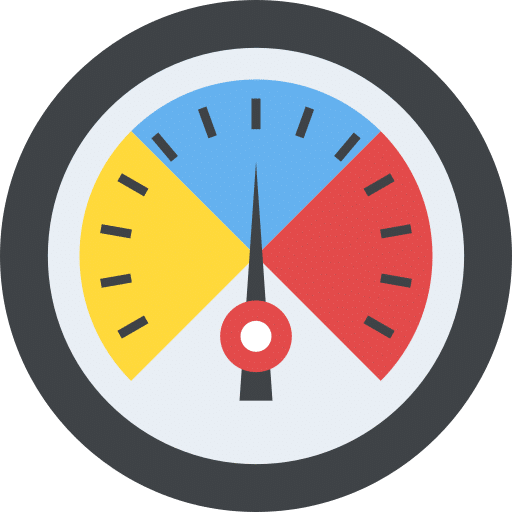
A gauge with a needle pointing straight up signals an Emergency: the left yellow section shows No Water, the top blue and right red indicate rising levels from safe to critical.

Check the Pressure

Look at the gauge near your tank. If it reads 0 PSI, the pump isn't delivering water. If it shows pressure but you have no water pressure in the house, you may have a major blockage.
Still no water? Call our specialists for priority dispatch:

Common Causes of Water Loss in the DMV

When our specialists arrive for a priority repair, we typically find the failure in one of these four areas. Identifying these early can save you from unnecessary and expensive full-system replacements.

1. Failed Well Pump Pressure Switch

The pressure switch is the “brain” of your system. Over time, the electrical contacts can burn or become pitted, causing the pump to stay off even when your house is out of water.

  • The Symptom: Rapid clicking sounds or no sound at all from the well equipment.

2. Ruptured Pressure Tank Bladder

Your pressure tank holds a reserve of water under pressure. If the internal bladder ruptures, the tank becomes “waterlogged.” This forces your pump to turn on and off every time you open a faucet (short-cycling), which will eventually burn out your pump motor.

  • The Symptom: Water pressure that “pulses” or drops off immediately after a few seconds of use.

3. Submersible Pump Motor Failure

After 10–15 years, the motor in your well pump can seize or short out. Since the pump is located hundreds of feet underground, this requires specialized equipment to pull and replace.

  • The Symptom: The breaker trips every time you try to reset it, or you have power to the switch but 0 PSI at the gauge.

4. Clogged Treatment "Stack"

Sometimes the pump works perfectly, but a neglected inline water filter or a sediment-heavy acid neutralizer has become completely blocked. This acts like a closed valve, stopping all flow.

  • The Symptom: High pressure at the well tank, but no water at the kitchen sink.

Why Us?​ 47+ Years Experience Clean Safe Water Trusted by Homeowners 5-Star Service

Why a Professional Diagnostic is Required

While flipping a breaker might bring the water back temporarily, a “No Water” event is almost always a warning sign of a deeper system failure. We provide a professional diagnostic because we don’t just ‘turn the water on’—we ensure it stays on.

  • Preventing Pump Burnout: If a pump is “short-cycling” due to a bad tank, it can burn out the motor in hours, turning a $500 repair into a $3,000 replacement.

  • Electrical Safety: Well systems use high-voltage 240v electricity. Improper handling of the pressure switch can lead to injury or electrical fires.

  • Root Cause Analysis: We perform a full amperage draw test on your pump to catch failures before they happen again.

You don’t have to guess — we’ll diagnose it fast and fix it right.

System Diagnostic Guide

What You See What it Likely Means The Next Step
0 PSI on Gauge Pump failure, power loss, or burnt switch. Professional Diagnostic
Water Pulsing Ruptured pressure tank bladder. Tank Replacement
Spitting Air Pipe leak in well or low water table. Well Inspection
Pressure but No Flow Clogged filter or blocked treatment system. Filter Service

Low Pressure? Fluctuating Pressure?

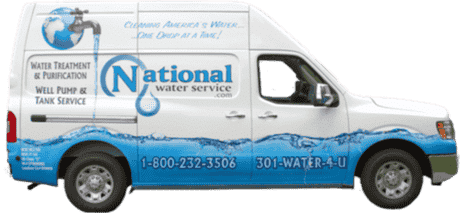
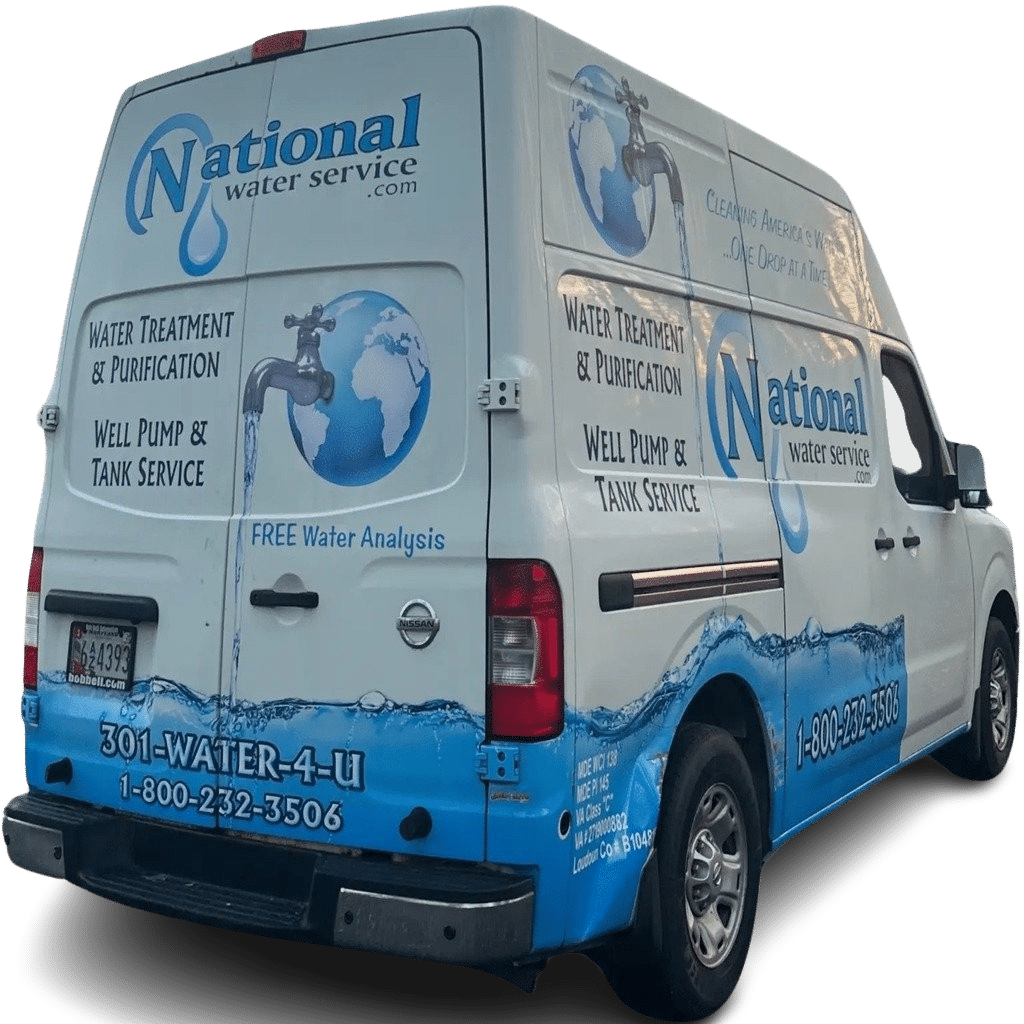
A white van with blue National Water Service branding, images of water and faucets, and contact information for water treatment, purification, and well pump services displayed on the sides and back.

Priority Service for MD, DC, and Northern VA

Since 1979, National Water Service has been the region's authority on groundwater systems. Our "Warehouse on Wheels" approach means we carry the pumps, tanks, and switches needed to restore your water on the very first visit.

No Water FAQ

Why is there no water in my house suddenly?

If you are on a private well, a sudden loss of water usually indicates a power issue to the pump, a failed pressure switch, or a pump motor failure. If you are on city water, it may be due to a local water main break or a shut-off valve that was accidentally closed. We recommend checking your breaker panel first before calling for a professional diagnostic.

If your cold water is running but the hot water has stopped, the issue is likely your water heater rather than your well system. Common causes include a tripped water heater breaker, a failed heating element (electric), or a pilot light that has gone out (gas). If you have no water at all, your heater simply has nothing to heat.

If your toilets aren’t filling, it’s a sign that water pressure has dropped below the level needed to operate the fill valve. This often happens during a well pump failure or if a whole-house water filter is 100% clogged with sediment.

Most high-quality submersible well pumps last between 10 and 15 years. However, factors like water quality (acidity or sand), the frequency of “short-cycling” from a bad pressure tank, and electrical surges can shorten that lifespan. We perform system audits to help extend the life of your equipment.