Many homeowners search for a salt free water softener to avoid the hassle of salt bags and maintenance. While “salt-free” technology exists, there is a critical difference between conditioning water and actually softening it.
At National Water Service, we believe in honesty. Helping Maryland and Virginia homeowners choose the right protection for their plumbing and health for over 47+ years has taught us that “one size fits all” solutions rarely work on local well water.
Does a Salt Free Water Softener Actually Soften Water?
The short answer is: No. In the water treatment industry, “softening” specifically means the physical removal of hardness minerals like calcium and magnesium. A salt-free system is technically a water conditioner or descaler. It doesn’t remove the “rock” from your water; it uses a process called Template Assisted Crystallization (TAC) to change the mineral structure so it doesn’t stick to the inside of your pipes.
The Reality Check: While your pipes might stay cleaner, the minerals are still in the water. You will still experience dry skin, dull hair, and white spotting on your dishes and glass shower doors.
Salt-Free Conditioner vs. Salt-Based Softener
To help you decide, we have compared the two most common hard water solutions side-by-side:
| System Type | Salt-Based Softener | Salt-Free Conditioner |
|---|---|---|
| Hardness Removal | 100% Removal (True Softening) | 0% Removal (Minerals Remain) |
| Maryland Well Suitability | Excellent (Handles 10+ GPG) | Poor (Fails on heavy minerals) |
| Soap & Lather | Uses 50% less soap/shampoo | No change in soap usage |
| Dish Spotting | Eliminated | Reduction only; spots remain |
| Maintenance | Periodic salt refills | Media replace every 3-5 yrs |
Why Salt-Free Systems Often Fail on Maryland Wells
Maryland well water is notoriously “heavy.” We frequently see hardness levels exceeding 10–15 grains per gallon (GPG).
Most salt free water softener systems are only effective for “slightly hard” water (under 3 GPG). When faced with the extreme mineral content found in Frederick, Carroll, or Montgomery County wells, these systems are quickly overwhelmed. This is why National Water Service prioritizes high-efficiency salt-based systems—they are the only proven way to guarantee soft water in our region.
All the Benefits, None of the Hassle
We know why people want salt-free: they hate carrying heavy bags and worry about sodium. We’ve solved both:
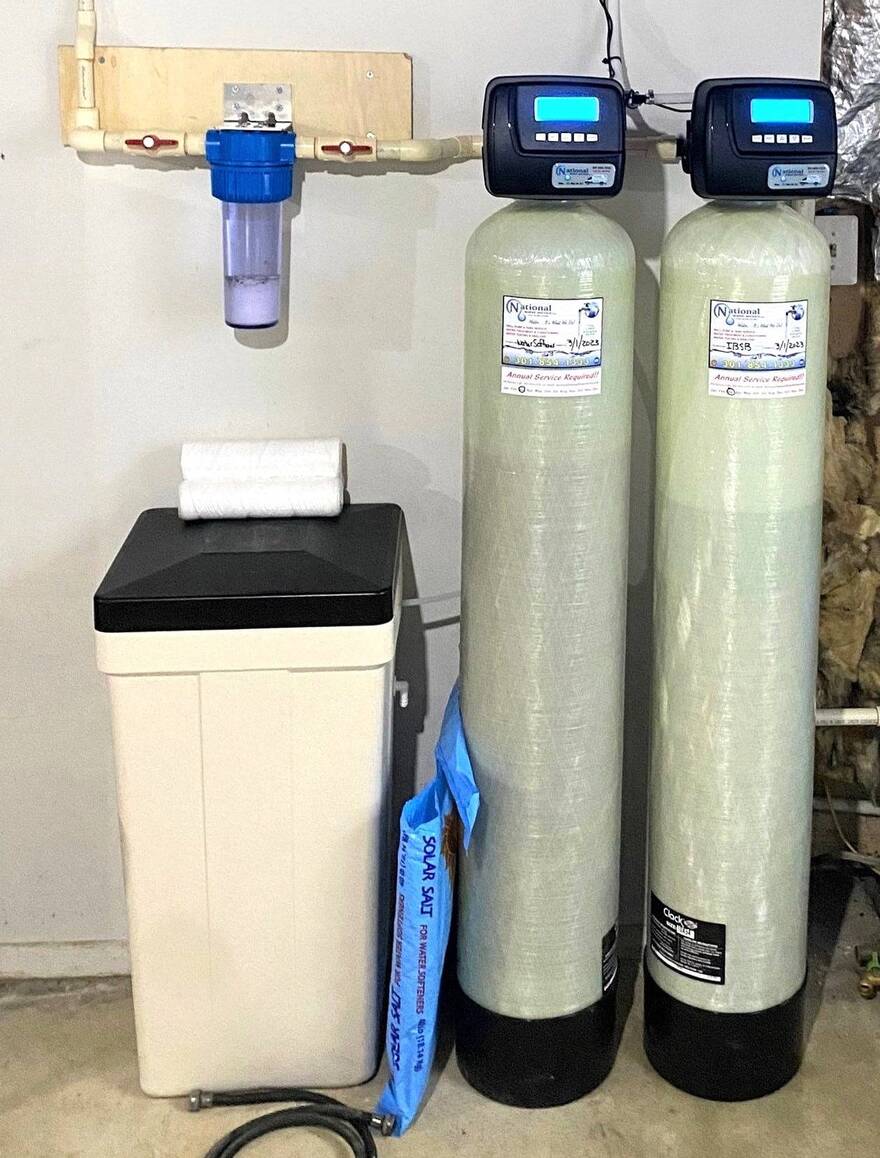
High-Efficiency Technology: Our modern systems use up to 40% less salt and water than older models. You often only need to add salt once every few months.
Salt Delivery Service: We can deliver salt directly to your basement during your annual maintenance checkup. You never have to lift a bag again.
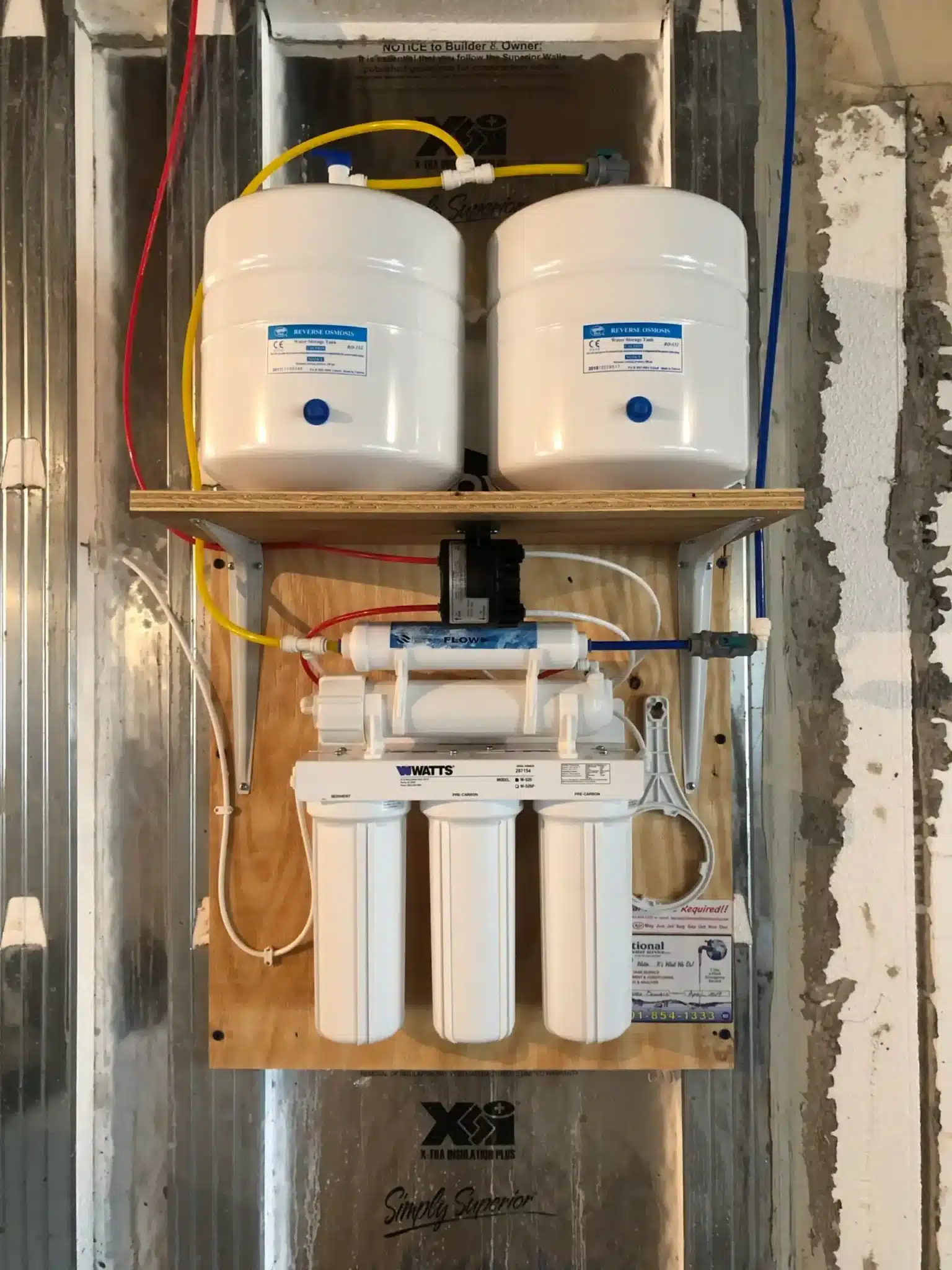
Drinking Water Purity: Concerned about sodium? We pair our softeners with Reverse Osmosis systems to remove 99% of all dissolved solids, providing bottled-quality water at your kitchen tap.
Expert Guidance: Our team also teaches our DMV homeowners how to fill up their water treatment systems with salt in cases that they would like to do it themselves.
Invest in Water That Actually Works.
Don’t settle for a “conditioner” when you need a softener. Protect your plumbing, your appliances, and your skin with a system that actually removes the hardness.
Ready to see what’s actually in your water? Get an Honest Water Test Today — Serving Maryland, Virginia, and the DMV for 47 years.
Check out our Water Treatment Solutions at National Water Service.
FAQ: Common Questions About Salt Free Water Softener Vs Salt
Does a salt-based water softener make my water taste salty?
No. This is the biggest myth in water treatment. In the ion exchange process, sodium is exchanged for calcium, but the amount is tiny. For most homes, the sodium content in a quart of softened water is less than what you’d find in a slice of white bread. You won’t taste it.
Do salt-free conditioners remove hard water stains?
Not entirely. Salt-free conditioners (descalers) are designed to stop minerals from sticking to the inside of your pipes. However, because the minerals are still in the water, when that water evaporates on your shower door or glassware, it will still leave a white residue (spots). Only a salt-based softener removes the minerals completely to eliminate spotting.
Is softened water safe to drink?
Yes, for the vast majority of people, softened water is perfectly safe and healthy to drink. If you are on a strictly low-sodium diet prescribed by a doctor, we can install a separate “drinking water faucet” (often a Reverse Osmosis system) that removes the sodium for drinking and cooking, while the rest of your home gets soft water for bathing and cleaning.
How much maintenance does a salt-based system really need?
Very little. Modern high-efficiency systems track your water usage and only regenerate when necessary. For the average family, you simply need to check the brine tank every 2–3 months and add a bag of salt if it’s getting low. It takes about 2 minutes of effort.
Can I install a salt-free system if I live in a condo or apartment?
This is one of the few times a salt-free unit might be the right choice. If you live in a building where you cannot run a drain line (which salt-based systems require for flushing), a salt-free conditioner is better than nothing. It will protect your water heater and pipes, even if it doesn’t give you the “luxury” soft water feel.
Can a salt-free conditioner remove iron?
No. If you have orange iron stains, a salt-free system will likely become “fouled” and stop working. You need a real softener or a dedicated iron filter.
Why is my current salt-free system not working?
If your water still feels “sticky” or your dishes are spotted, your water is likely too hard for a conditioner to handle. A professional water test will tell you exactly how many grains of hardness your system is trying to fight.